
Forecasting Office Demand in a Remote Work Era
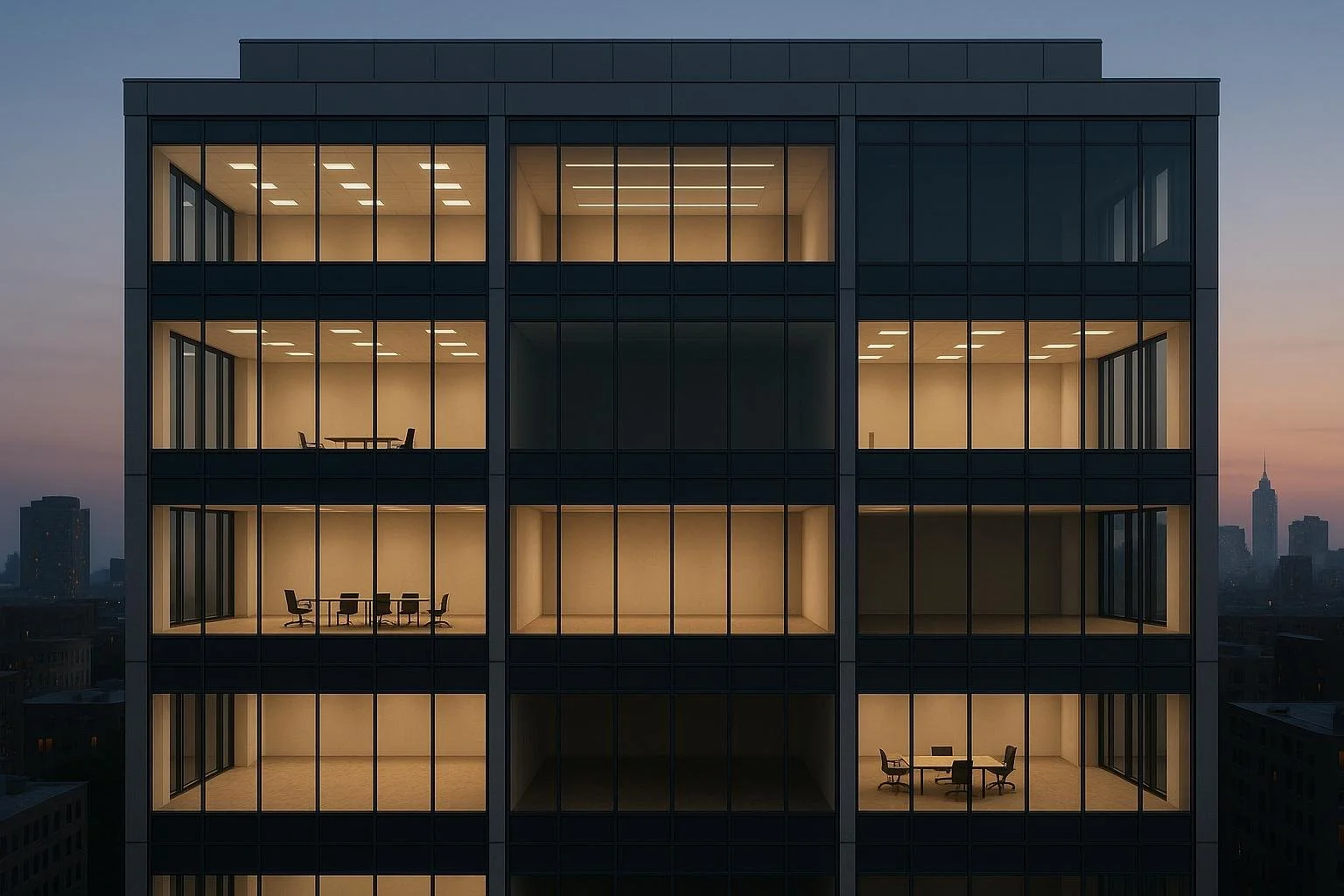
The office market has permanently shifted, with demand now at 70% of pre-pandemic levels. Remote and hybrid work models, high vacancy rates (20.7% in Q2 2025), and a growing trend of office-to-residential conversions (149 million square feet planned) are reshaping the landscape. Companies are prioritizing smaller, high-quality spaces with collaborative layouts, while older buildings face declining appeal.
Key insights:
- Vacancy Rates: Projected to hit 23% by year-end 2025, with some cities exceeding 27%.
- Remote Work Trends: 22–27.9% of the U.S. workforce (32.6 million people) work remotely in 2025.
- Net Absorption: Stabilized with 5.6 million sq ft in Q1 2025, but well below historical averages.
- Office-to-Residential Conversions: A key strategy to manage oversupply, especially for Class B/C properties.
The future of office demand depends on hybrid work adoption, economic conditions, and regional trends. Real estate professionals must use real-time data and flexible forecasting tools to navigate this evolving market.
Why Corporate America Is Abandoning Remote Work
The Office Market in 2025
After enduring years of decline, the office market has shown signs of stabilization. For four consecutive quarters, net absorption has been positive, with Q1 2025 recording 5.6 million square feet, following 7.3 million in Q4 2024[2]. While this signals a shift from contraction to recovery, the pace remains subdued compared to historical norms.
Currently, the four-quarter rolling average for net absorption sits at 3.6 million square feet - far below the quarterly average of 22.9 million square feet seen from 2010 to 2019[2]. Even with employment growth, projections suggest net absorption will peak at just 11.2 million square feet over the next two years, less than half of pre-pandemic levels[2].
Vacancy rates provide further context. As of Q1 2025, the nationwide vacancy rate held steady at 11.8%[2]. However, Moody's Analytics reported a higher figure of 20.7% for Q2 2025, with expectations of reaching 23% by the end of the year and potentially peaking at 24% in 2026[3][5]. These discrepancies reflect varying methodologies but point to a broader trend: elevated vacancy rates are now a structural feature of the market. Current leasing patterns also illustrate a reduction in office space per worker[2].
Current Market Trends
The data paints a clear picture of a divided office market. Premium, amenity-rich properties are attracting tenants, while older buildings struggle to remain competitive. The development of speculative office skyscrapers has largely faded, giving way to demand for flexible, mixed-use spaces that align with modern work styles[3]. Class A properties with updated amenities and adaptable layouts are better positioned to succeed, whereas older, less flexible buildings often lag behind.
A growing trend is the conversion of office buildings into residential spaces. Nationwide, 149 million square feet are slated for such transformations[3]. For instance, Philadelphia is converting over 1 million square feet of office space into residential use, a move that helps stabilize local vacancy rates[3]. These conversions highlight the declining appeal of many older office buildings.
Investment strategies are also shifting. Developers are stepping away from office construction, focusing instead on sectors like logistics and industrial real estate, where vacancy rates are much lower - around 7.1%[3]. Regional differences further complicate the picture. McKinsey projects a 13% drop in office demand across cities by 2030, with some urban areas potentially seeing declines as steep as 38% in severe downturns[5]. Cities that actively pursue conversion strategies tend to stabilize more effectively. Meanwhile, property values are expected to fall by about 26% by the end of 2025, prompting property owners to reevaluate their assets[5].
How Hybrid Work Models Affect Office Space
The rise of hybrid work continues to shape office space needs, even as remote work adoption has plateaued. By 2025, an estimated 22–27.9% of the workforce - over 32.6 million Americans - will work remotely[6]. While the initial shock of remote work has passed, the structural changes it introduced remain deeply ingrained in how companies manage office space.
Office attendance patterns have shifted noticeably. The percentage of workers spending four or more days on-site doubled from 34% in 2023 to 68% in 2024, with 72% of businesses now requiring in-office attendance[6]. Despite this push, building access data shows only gradual year-over-year increases in office utilization since 2023[2]. As a result, companies are rethinking how they use their spaces, prioritizing collaborative areas, meeting rooms, and amenities over traditional desk setups.
This shift aligns with data showing reduced office space per worker and a growing preference for flexible layouts. For the remainder of 2025, net absorption is expected to reach 24.9 million square feet, while 2026 is projected to add another 15.1 million square feet[2]. However, slower employment growth tempers these gains. Between 2023 and 2033, total employment is forecasted to grow by 6.7 million jobs - just one-third of the 19.8 million jobs added from 2009 to 2019[2]. With office demand now about 30% below pre-pandemic levels[5], the market appears to have settled into a new, more restrained equilibrium.
What Drives Office Space Demand
Office space demand in 2025 is shaped more by its purpose and strategic value than by simple occupancy numbers. Employers are rethinking their approach, treating office spaces as assets that must prove their worth. This shift has led to smaller footprints with an emphasis on quality, aligning with hybrid work models and the evolving needs of modern workplaces.
What Employers Want
In 2025, companies are carefully balancing cost savings with the need to create appealing work environments. Remote work offers significant savings - up to $10,600 per remote employee and a 40% reduction in overhead costs. Yet, many organizations recognize the unique benefits of in-office work, such as fostering innovation, building team cohesion, and improving employee retention[6].
This renewed focus on in-person collaboration has driven an increase in office attendance. Employers no longer see office space as just a cost to manage but as a tool to attract and retain top talent. To meet these goals, they’re demanding modern office spaces that go beyond traditional designs. Features like sustainability-certified green buildings, advanced 5G networks, AI-powered collaboration tools, and wellness-oriented environments are now considered baseline requirements rather than optional perks[6]. These upgrades make the commute worthwhile for employees who may only spend part of their week in the office, ensuring their time on-site is both productive and rewarding.
Companies are also prioritizing quality over quantity. While the amount of space occupied per employee remains below pre-2020 levels, the focus has shifted to creating high-quality environments. This includes collaborative spaces, well-equipped meeting rooms, and amenities that enhance the overall work experience, replacing the need for sprawling desk setups.
Location and Access
Location plays a critical role in office space demand. Urban areas with excellent public transit and walkable neighborhoods continue to attract interest, though overall demand in these areas remains lower than before the pandemic[7]. The hybrid work model has made convenience a top priority - employees working in-office part-time value easy access to transit and nearby amenities that make their workdays smoother.
Proximity to urban centers is key to meeting employee expectations for flexibility. Companies are consolidating their office locations, focusing on premium areas where employees are more likely to want to work. This shift allows businesses to invest in higher-quality spaces rather than spreading resources thin across multiple sites.
This trend also impacts cities as a whole. Declining office occupancy can reduce real estate tax revenues, which in turn affects public services like schools and transit systems[7]. These challenges can make certain areas less attractive, further discouraging office demand. However, cities that adapt, like Philadelphia - where over 1 million square feet of office space was converted into residential units - manage to stabilize vacancy rates and maintain urban vibrancy[3].
Transit access and walkability have become non-negotiable for office buildings. Properties near major transit hubs or in areas with restaurants, shops, and services command higher rents and enjoy better occupancy rates. In contrast, isolated suburban office parks have struggled with rising vacancies, defying earlier predictions that decentralization would boost their appeal[3]. This focus on strategic locations is setting the stage for a new era of flexible and adaptable office designs.
Flexible and Modular Spaces
The rise of flexible and modular office designs reflects the reality that 22-27.9% of the U.S. workforce - over 32.6 million people - will work remotely in 2025[6]. Traditional layouts with assigned desks for everyone no longer make sense when hybrid schedules mean fluctuating occupancy throughout the week.
To address this, employers are turning to coworking setups and hot-desking, which maximize space utilization and reduce the need for unused desks[3]. Shared workspaces and adaptable designs allow companies to make the most of their square footage, creating dynamic environments that suit a range of needs.
Modular designs are particularly valuable because they allow for quick reconfigurations of spaces like meeting rooms and collaborative areas. This adaptability is crucial in an uncertain economic landscape, where companies want the flexibility to scale their office needs up or down without committing to new leases or expensive renovations.
The push for flexible spaces also aligns with slower workforce growth. Between 2023 and 2033, employment is expected to grow by 6.7 million jobs - just one-third the rate seen between 2009 and 2019[2]. This slower growth makes it impractical for businesses to commit to large, fixed office spaces. Instead, modular designs offer the versatility to adjust as needed, especially as office demand hovers around 70% of pre-pandemic levels[5].
Today, flexible and mixed-use spaces are setting the standard for competitive office design[3].
sbb-itb-99d029f
How to Forecast Office Demand
Forecasting office demand for 2025 requires a careful look at how remote and hybrid work have reshaped the landscape. Traditional methods still play a role, but they need to be fine-tuned to reflect the reduced office space usage per worker. By combining data-driven techniques with insights into market trends, real estate professionals can gain a sharper understanding of what lies ahead.
Quantitative Forecasting Methods
Three key metrics form the backbone of any solid office demand forecast: net absorption, vacancy rates, and rent trends.
- Net absorption tracks the amount of office space occupied minus the space vacated over a given period. It’s a direct measure of demand. For example, in Q1 2025, net absorption reached 5.6 million square feet, following 7.3 million square feet in Q4 2024[4]. This reflects a long-term decline in space utilization per worker, a critical factor for future forecasts.
- Vacancy rates provide a snapshot of available office space. As of Q2 2024, the nationwide vacancy rate stood at 20.7%, with projections suggesting it could rise to 23% in 2025 and 24% in 2026[3][5]. High vacancy rates often suppress rent growth, signaling weaker demand. For instance, if net absorption increases but vacancy rates also climb, it likely means new supply is outpacing demand.
- Rent trends offer insights into market conditions and investor sentiment. In areas with high vacancy rates, rents are often stagnant or declining. Comparing asking rents with effective rents (which account for concessions like free rent or tenant improvement allowances) can provide a clearer picture of market dynamics.
To make the most of these metrics, monitor them quarterly and compare them to historical averages. Tools like the NAIOP Research Foundation’s Office Space Demand Forecasts can help track these trends on both national and regional levels[4]. Incorporating scenario models can also enhance forecasting accuracy. For instance, one projection anticipates net absorption of 24.9 million square feet under milder conditions, while another suggests up to 30.0 million square feet in a non-recession scenario[2].
Adjusting for Local Market Conditions
While national trends set the stage, local dynamics often tell a different story. Factors like regional economic strength, industry mix, and workplace culture can significantly impact office demand.
For instance, cities with a high concentration of remote-friendly industries, such as technology or professional services, may see weaker demand compared to those reliant on in-office sectors like finance or government. Employment growth in office-heavy industries is another critical indicator to watch[4].
Other considerations include employer size and local policies. Large corporations often have different return-to-office strategies compared to smaller businesses. Local initiatives can also influence vacancy rates. For example, Philadelphia converted over 1 million square feet of vacant office space into residential units, helping to stabilize its market[3]. Looking ahead, McKinsey predicts that demand could drop by 13% in average cities and up to 38% in the hardest-hit areas by 2030[5].
Submarket nuances matter too. High-end properties, like trophy and Class A buildings, continue to attract demand, while secondary markets face challenges. When forecasting for a specific property or area, consider tenant preferences such as transit access, walkability, and amenities.
Using Real-Time Data Analytics
Traditional forecasting often relied on quarterly reports, which can quickly become outdated. Today’s fast-changing market calls for real-time data to spot trends early and adjust forecasts accordingly.
For example, building access data can reveal occupancy patterns that deviate from expectations, prompting immediate updates to forecasts[2]. The NAIOP model highlights this: while an earlier forecast predicted 4.8 million square feet of net absorption for Q4 2024 and Q1 2025, the actual figure hit 12.9 million square feet, underscoring the importance of real-time feedback[2].
Platforms like CoreCast (https://corecastre.com) simplify this process by consolidating data streams, including historical absorption, employment trends, remote work adoption rates, and rent metrics. These tools allow analysts to model multiple scenarios, reducing reliance on error-prone spreadsheets. Features like geographic flexibility and visualization tools make it easier to drill down into regional specifics and present findings through charts and branded reports.
One final piece of the puzzle is tracking office-to-residential conversions. Nationwide, 149 million square feet are slated for such conversions[3]. Analysts must distinguish between declining demand (fewer companies needing office space) and reduced supply (space removed from the market). Significant conversions can lower vacancy rates by reducing total office inventory, even if absolute demand remains unchanged.
Managing Market Changes and Risks
Predicting office demand today means factoring in major structural changes and economic uncertainties. Two key forces shaping the market are the growing trend of office-to-residential conversions and the unpredictable economic outlook, both of which could significantly impact absorption rates. Adjusting models to reflect these realities is crucial for avoiding costly errors and refining market forecasts.
Office-to-Residential Conversions
Transforming office buildings into residential units is emerging as a prominent strategy to tackle the oversupply of office space. Across the country, about 149 million square feet of office space is slated for conversion into housing[3]. These conversions change the supply landscape by taking underperforming properties off the market, which can improve vacancy rates for the remaining office spaces - even if overall demand hasn’t increased.
That said, conversions aren’t without challenges. Zoning restrictions, architectural limitations, and high renovation costs often limit these projects to older buildings with smaller floor plates, primarily affecting Class B and C properties rather than newer Class A spaces[3].
When incorporating conversions into forecasts, it’s important to monitor the pipeline of projects by market and building class. Since permitting and construction can take 2–4 years, supply reductions should be modeled gradually. Additionally, keeping an eye on local zoning changes and regulatory shifts is critical, as they directly impact the feasibility and pace of these projects. It’s also crucial to distinguish between declining demand - fewer companies needing office space - and reduced supply, which results from these conversions. Misinterpreting this dynamic could lead to overly optimistic recovery projections. By integrating these trends, forecasters can better understand recent deviations from historical absorption patterns.
Economic Uncertainty and Risk Factors
Economic uncertainty adds another layer of complexity to demand forecasting. For example, the NAIOP forecast assumes a 70% chance of a mild recession in the near term[2]. Under this assumption, net office absorption is projected to reach 24.9 million square feet over the last three quarters of 2025, dropping to 15.1 million square feet in 2026[2].
However, outcomes could vary widely. If a recession is avoided, absorption could hit 30.0 million square feet between Q2 2025 and Q1 2026, then slow to 17.4 million square feet in the following year[2]. On the other hand, a sharper economic downturn - perhaps triggered by trade conflicts or geopolitical crises - could lead to significantly lower or even negative absorption levels[2].
Several risk factors complicate the outlook, including potential shifts in U.S. trade policy, concerns over federal debt, and rising long-term interest rates[2]. While low unemployment and moderate inflation could soften the blow of a recession, these factors still create a wide range of potential scenarios. Adding to the pressure, around $290 billion in office-related loans are set to mature by 2027, which could lead to defaults and liquidity issues, particularly for regional banks heavily invested in commercial real estate[3]. This financial strain might push landlords to sell properties, lower rents to maintain occupancy, or face defaults - all of which would ripple through the market.
| Scenario | Time Period | Projected Net Absorption |
|---|---|---|
| Mild Recession (70%) | Last 3 Quarters of 2025 | 24.9 million sq ft |
| Mild Recession (70%) | 2026 Full Year | 15.1 million sq ft |
| No Recession | Q2 2025 - Q1 2026 | 30.0 million sq ft |
| No Recession | Q2 2026 - Q1 2027 | 17.4 million sq ft |
The relationship between employment growth and office space demand has also fundamentally shifted. From 2009 to 2019, the U.S. added 19.8 million jobs while office space usage remained relatively stable[2]. Looking ahead, employment growth is expected to slow, with only 6.7 million new jobs projected between 2023 and 2033 - just a third of the pre-pandemic pace[2]. This means straightforward employment-to-square-footage models are no longer sufficient. Instead, forecasters must incorporate data on hybrid work trends and employer space-per-employee ratios. For context, the four-quarter rolling average for net absorption is now 3.6 million square feet, far below the 22.9 million square feet quarterly average seen from 2010–2019[2].
To address these uncertainties, scenario-based forecasting is essential. Models should account for mild, severe, and no-recession scenarios, with specific triggers - like unemployment exceeding 5% or major trade policy changes - that prompt immediate reassessment of projections.
Platforms like CoreCast simplify this process by consolidating data streams and enabling real-time scenario modeling. By tracking employment trends, conversion pipelines, debt maturities, and absorption patterns together, these tools allow for quick adjustments as market conditions evolve. They also support analysis across asset classes, helping assess the broader impact of office-to-residential conversions.
Geographic differences further complicate forecasting. For example, San Francisco’s office vacancy rate has jumped to 27.7%, compared to just 8.6% pre-pandemic[3]. Similarly, downtown areas in New York and Charlotte report vacancy rates near 23%, well above the national average[3]. These disparities stem from variations in local industries, remote work adoption, and tenant preferences.
Recent data shows some stabilization, with four consecutive quarters of positive net absorption following a period of declining demand[2][4]. However, nationwide vacancy rates still hover between 11.8% and 20.7%[2][3], suggesting that while demand may have stopped shrinking, it’s far from returning to pre-pandemic levels. These elevated vacancy rates should be seen as the new baseline rather than a sign of recovery.
To navigate these challenges, real estate professionals need flexible models that integrate conversion trends, economic scenarios, and real-time data. This approach allows for more informed decisions, even in an unpredictable market.
Conclusion
Predicting office demand for 2025 requires a fresh perspective. While the market shows signs of stabilizing - with four consecutive quarters of positive net absorption, including 5.6 million square feet in Q1 2025 - demand still lags at 70% of pre-pandemic levels. Vacancy rates sit at 11.8%, and remote work trends have firmly established a new normal [2][5]. These changes represent a lasting shift, not a temporary disruption, with slower job growth signaling reduced future absorption.
This evolving landscape demands a new investment strategy that incorporates various economic scenarios. Forecasts suggest net absorption could reach 24.9 million square feet in the last three quarters of 2025 during a mild recession, or as much as 30.0 million square feet if economic conditions remain stable [2]. Portfolio managers can use these scenarios to identify which assets are most resilient under different market conditions.
With 72% of companies now requiring employees to return to the office and on-site workdays doubling since 2023 [6], leasing strategies must evolve. Tracking metrics like net absorption, access data, and return-to-office trends is essential to navigate this new environment.
Portfolio management also needs to adapt to declining office demand and the 149 million square feet slated for office-to-residential conversions [3]. Evaluating zoning flexibility and retrofit costs is key. Cities like Philadelphia, which has already converted over 1 million square feet, illustrate how adaptive reuse strategies can gradually tighten supply [3].
Traditional forecasting methods are no longer enough. Real-time analytics are now critical. For example, the NAIOP model had predicted 4.8 million square feet of net absorption for Q4 2024 and Q1 2025, but actual absorption reached 12.9 million square feet [2]. This gap underscores the importance of tools like CoreCast, which consolidate data streams to support smarter decisions in underwriting, portfolio analysis, and pipeline management.
Industry leaders emphasize the value of this integrated approach:
"They have seamlessly provided the expertise and support we needed to streamline our operations and make smarter, data-driven decisions." - Clay Heighten, Principal, Caddis Healthcare RE [1]
The office market has fundamentally changed. Success now hinges on embracing these structural shifts, using real-time data, and adopting flexible forecasting models that account for economic uncertainties, employer policies, and local market dynamics. Real estate professionals who adjust their strategies - whether in forecasting, portfolio management, or decision-making - will be best equipped to mitigate risks and seize emerging opportunities.
FAQs
What impact do office-to-residential conversions have on the office market, and what challenges do these projects face?
Office-to-residential conversions are changing the landscape of the office market by reducing the supply of traditional office spaces, particularly in areas struggling with high vacancy rates. These projects not only breathe new life into underused office buildings but also help tackle housing shortages, especially in urban areas where demand for living spaces is high.
That said, the process isn’t without its challenges. Zoning regulations can complicate these projects, renovation costs can be steep, and older office buildings often come with structural constraints that make it tricky to adapt them into functional residential layouts. On top of that, developers need to ensure the conversions align with local housing codes and address the needs of the market.
Even with these obstacles, converting offices into residences offers a creative way for cities to repurpose outdated buildings and respond to the shifting dynamics of the real estate market.
How does real-time data analytics help forecast office space demand in today’s remote work landscape?
Real-time data analytics has become indispensable in gauging and predicting office space demand, particularly as remote and hybrid work models continue to reshape the workplace landscape. By delivering current insights into market trends, tenant preferences, and occupancy patterns, it empowers businesses to act swiftly and with confidence.
This data-driven approach doesn’t just enhance decision-making - it also simplifies operations and fine-tunes investment strategies. By consolidating critical metrics and offering actionable predictions, businesses gain a sharper, more adaptable view of the ever-changing office space market.
How are companies managing office space needs while supporting both remote work and in-person collaboration?
Companies are reimagining how they use office spaces to strike a balance between the convenience of remote work and the advantages of in-person collaboration. Many have embraced hybrid work models, allowing employees to divide their time between home and the office. This shift has led to a decreased reliance on traditional, full-time office setups.
To keep up with these changes, businesses are reconfiguring their workspaces to prioritize teamwork and interaction. This includes adding more shared areas, increasing the number of meeting rooms, and introducing hot-desking systems. By using data and forecasting tools, companies can better anticipate office space needs and fine-tune their real estate strategies to align with the demands of a more flexible workforce.