
5 Common Tenant Communication Issues Solved by Automation
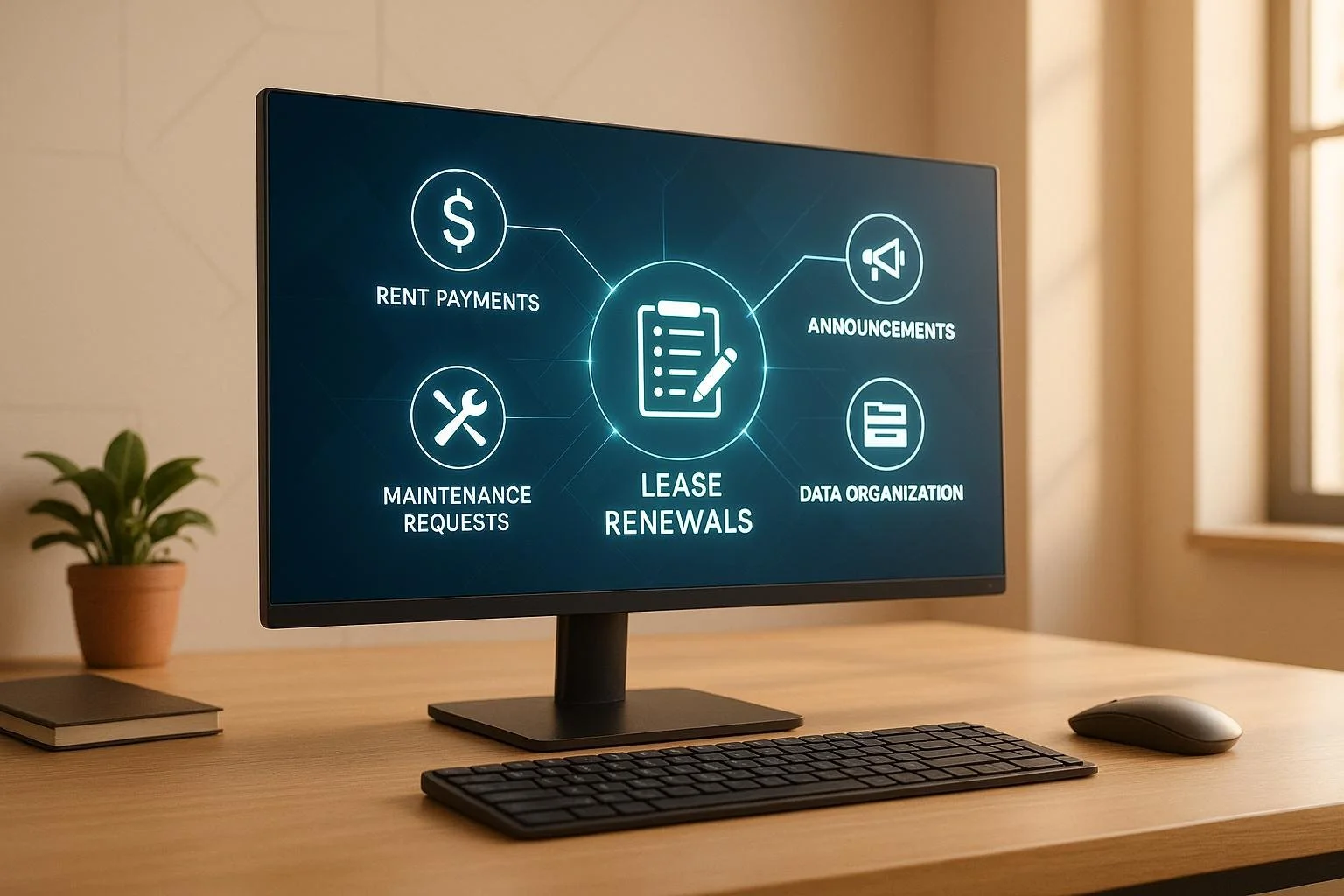
Automation solves major tenant communication problems, saving time and reducing errors. It simplifies rent reminders, maintenance requests, building-wide updates, data management, and lease renewals. Key benefits include consistent messaging, faster response times, and better tenant satisfaction. Here's how automation addresses these challenges:
- Missed Rent Payments: Scheduled reminders improve on-time payments and reduce disputes.
- Delayed Maintenance Responses: Centralized systems streamline requests and keep tenants informed.
- Inefficient Announcements: Mass messaging ensures timely updates across multiple channels.
- Fragmented Data: Integrated systems consolidate tenant records for better accuracy and compliance.
- Reactive Renewals: Early, automated outreach improves retention and minimizes vacancies.
Automation replaces manual processes with reliable workflows, creating a smoother experience for tenants and property managers alike. By integrating tools like CoreCast with property management systems, teams can manage operations efficiently while enhancing tenant communication.
How to Automate Tenant Communication with AI Chatbots: A Step-by-Step Guide
Problem 1: Missed or Late Rent Payments
When rent reminders rely on manual processes, things can quickly spiral into chaos. Staff might forget to send notices, confuse due dates, or simply run out of time while juggling the demands of managing dozens - or even hundreds - of units. Some tenants don’t get reminders at all, while others receive them so close to the due date that they’re practically useless. The result? Late payments pile up, and monthly cash flow becomes unpredictable.
The situation worsens when tenants aren’t clear about when payments are due, which payment methods are accepted, or how late fees are applied. Without clear, documented communication, disputes over rent and fees become more frequent. Missed or delayed reminders also make it harder to establish a pattern of late payments or prove proper notice was given - critical details when legal action is required.
Manual processes also create operational headaches. Staff spend hours sifting through spreadsheets and paper records, leading to errors and delays. Payments made by check or money order require physical trips to the bank and manual entry into the system, increasing the risk of mistakes like transposed numbers or misplaced deposits. After the grace period ends, managers must manually identify late payers and send out late notices - another step prone to being missed or delayed. Add scattered communication across emails, texts, and handwritten notes, and the entire rent collection process becomes inefficient and error-prone.
Automation eliminates these inefficiencies, replacing them with consistent, scheduled reminders that help ensure tenants pay on time.
Automated Rent Payment Notifications
Automation streamlines the rent collection process by using a rules-based system to schedule reminders tailored to each tenant's lease terms. The property management system stores all the essential data - rent amounts in U.S. dollars, due dates, grace periods, and late-fee policies - and syncs with communication tools to automatically send notifications. This setup allows property managers to create targeted campaigns for different tenant groups without manual effort.
An effective automated system includes several key reminders throughout the payment cycle:
- Pre-due reminders: Sent 5–7 days before the due date and again one day prior, these messages clearly state the amount due, the due date, and accepted payment methods like an online portal or ACH transfer.
- Day-of-due notice: Alerts tenants that rent is due today, often with a direct link to the payment portal.
- Grace-period reminders: Sent during the grace period (e.g., on the 3rd if late fees start on the 5th), these reminders restate the late-fee policy and provide a countdown to avoid extra charges.
- Past-due notices: Triggered on specific dates (e.g., the 5th and 10th), these notices include updated balances with late fees and outline next steps if the account remains unpaid.
- Payment confirmations: Sent instantly after a payment is made, these receipts include the amount paid, date, local time, and any remaining balance. They’re stored in the tenant’s digital record for transparency and legal protection.
Segmentation makes these notifications even more effective. For example, tenants who have paid late more than twice in the last six months can be placed in a "high-risk" workflow with extra reminders, clearer fee explanations, and optional payment-plan details. New tenants in their first 90 days might receive more frequent, educational reminders, including portal tutorials and FAQs. Meanwhile, long-time tenants with a history of on-time payments can receive fewer, more concise messages to avoid notification fatigue, while still getting payment confirmations and policy updates.
When platforms like CoreCast integrate with property management systems, they provide even deeper insights. Owners and asset managers can identify tenant segments with the highest risk of late payments across their portfolios. This data helps teams fine-tune communication strategies to improve on-time payments - all without disrupting the day-to-day operations handled by the property management system.
Automation also ensures redundancy and compliance by using multiple communication channels based on tenant preference. Email works well for detailed notices, while SMS is ideal for quick, time-sensitive updates like "Rent is due tomorrow, $1,500. Pay via portal." In fact, 59% of tenants prefer text messages for reminders from their property manager [2]. Tenant portals and apps centralize everything, offering one-click payments and a complete message history tied to each unit. Tenants should select their preferred communication channels at move-in, and automation can ensure critical notices - like late or legal updates - are mirrored across at least two channels for added reliability.
Manual vs. Automated Rent Collection
The difference between manual and automated rent collection becomes clear when you compare the two approaches. Manual processes require staff to remember to send reminders, often relying on spreadsheets or calendars. This creates a high risk of missed or delayed outreach - especially at scale. Automated systems, on the other hand, use lease data to trigger reminders and notices on schedule, removing the need for staff to track each tenant individually.
Manual methods often involve phone calls, ad-hoc emails, or posted notices, which tenants can easily overlook or ignore. Automated workflows leverage multiple channels - email, SMS, app notifications, and portal banners - tailored to tenant preferences, which increases the likelihood that messages are seen and acted upon. Manual processes also tend to be inconsistent, with timing and tone varying depending on who handles the task. Automated systems apply standardized templates and timelines, ensuring all tenants are treated fairly while still allowing for personalized touches.
| Process Step | Manual Rent Collection | Automated Rent Collection |
|---|---|---|
| Reminder creation | Staff draft and send individual emails or make calls; prone to forgetting or delays. | Preconfigured templates automatically triggered by due dates and lease terms. |
| Payment method | Checks, money orders, or cash collected in person; requires bank trips and manual deposits. | Online payments via portal (ACH, card, bank transfer); funds post automatically. |
| Tracking & reconciliation | Spreadsheets or paper ledgers; manual updates; time-consuming and error-prone. | Real-time dashboards show payment status for all units; instant updates on payments. |
| Late-fee handling | Case-by-case calculation and manual application; risk of inconsistencies. | Rule-based automatic fee application; consistent and accurate. |
| Error risk | High: lost checks, misapplied payments, skipped tenants. | Low: systemized rules, automatic syncing, and audit logs for every transaction. |
| Staff time per unit | High and variable; repeated calls, follow-ups, and manual logging. | Low and predictable; staff focus on exceptions like disputes or hardship cases. |
With automation, errors drop significantly because amounts, dates, and payment statuses are pulled directly from the property management system. This reduces oversight mistakes and frees up staff to focus on more meaningful tasks, like addressing hardship cases or resolving disputes. Predictable cash flow becomes achievable as on-time payments increase, and fewer tenants fall through the cracks. Owners also gain real-time visibility into rent collection across their portfolios, eliminating uncertainty.
From a legal perspective, manual processes often leave a patchwork of records - emails, notes, and phone logs - that can make it difficult to prove notices were sent if disputes arise. Automated systems create a centralized digital log for each tenant, complete with time stamps and delivery confirmations, ensuring compliance and providing the documentation needed for legal protection.
Problem 2: Delayed Maintenance Request Responses
When maintenance requests come in through various channels - like phone calls, emails, texts, or even walk-ins - it’s easy for things to fall through the cracks. A tenant might call about a leaky faucet, email about a broken AC unit, or stop by the office to mention a faulty light switch. Without a centralized system, these requests often get misplaced, forgotten, or buried under sticky notes, creating a “black hole” where tenants feel ignored and resort to filing repeat complaints.
This disorganized setup causes chaos for property teams. Without a clear audit trail to confirm receipt of a request or a way to prioritize urgent issues over routine ones, follow-ups are frequently missed. Manual tracking only makes things worse. Relying on memory or personal to-do lists means tickets can easily slip through the cracks. Without automated escalation for overdue requests, timely follow-ups become a challenge. As a result, tenants often have to chase updates, adding to the workload of already stretched property teams.
Automation offers a solution by streamlining the process. A centralized system can capture all maintenance requests, route them to the right person or vendor, and keep tenants informed with real-time updates during the repair process.
Automating Maintenance Request Workflows
Automation revolutionizes how maintenance requests are managed by consolidating communication into a single portal or mobile app. From a tenant’s perspective, the process becomes simple and efficient: log into the portal, describe the issue, attach photos or videos if needed, select the urgency level (emergency, urgent, or routine), and submit the request. The system acknowledges receipt with a ticket number and an estimated response time. Tenants can then track the status - whether it’s marked as "Scheduled", "In Progress", or "Completed" - without needing to call or email for updates. This not only simplifies submissions but also improves transparency for tenants.
For property teams, all requests are funneled into a central dashboard, where they are time-stamped, categorized (e.g., plumbing, HVAC, electrical), and prioritized automatically based on urgency and property-specific rules. This eliminates the need to juggle requests across emails, voicemails, or handwritten notes. Every action - whether it’s acknowledging the request, scheduling repairs, ordering parts, or marking completion - is digitally logged, creating a clear paper trail for compliance and resolving disputes.
Automation rules make the system even smarter. Tickets can be auto-assigned based on factors like property, unit, category, and priority. For example, all "HVAC – Urgent" tickets at a specific building can go directly to the designated technician, while routine requests are evenly distributed across the team. The system also enforces service-level targets by sending alerts if a ticket isn’t acknowledged within a set timeframe or if an emergency request isn’t updated promptly. This ensures that critical issues get the attention they need.
Escalation workflows prevent requests from being overlooked. If a ticket remains unresolved past a certain time, the system notifies a supervisor, reducing the chances of delays during busy periods.
Automated notifications keep tenants informed every step of the way. Standard message templates can notify them when a ticket is received, when a technician is scheduled, when parts are ordered, and when the work is completed. Even a simple update like “We’re waiting for a part; estimated completion is Friday” can go a long way in reducing tenant frustration. Using SMS for quick alerts, combined with email or portal messages for detailed updates, ensures communication is timely and well-documented.
Tenant portals and property management systems work together to handle everything from ticket intake and work order creation to scheduling and notifications. A CRM-style layer tracks tenant profiles, communication history, and preferences, enabling property managers to address unresolved maintenance issues more effectively. When integrated with platforms like CoreCast, maintenance, financial, and portfolio data come together, helping managers make informed decisions about staffing, vendor contracts, and capital improvements. While CoreCast isn’t a property management or bookkeeping system, it adds a strategic layer to overall operations.
Implementing automated workflows requires careful planning. Start by mapping current communication channels and standardizing categories, priorities, and service-level agreements (SLAs). Pilot the system at one or two properties, train staff on using centralized queues instead of personal inboxes, and clearly communicate to tenants - via email, SMS, or move-in packets - that all non-emergency maintenance requests should go through the portal for faster service. Regularly monitor dashboards, review exceptions, and refine templates to improve the process over time.
Before and After Automation Metrics
The impact of automation becomes clear when you compare key metrics from before and after implementation. Track baseline data like first response times, resolution times, SLA adherence, duplicate tickets, and tenant satisfaction before rolling out automation.
After centralizing and automating workflows, properties often see dramatic improvements. Response times can drop by 30–50%, on-time completion rates can exceed 90%, and duplicate inquiries tend to disappear as tenants gain access to real-time status updates. Emergency overtime spending also decreases since more issues are resolved during regular hours, avoiding costly after-hours callouts. The table below highlights some of these measurable improvements:
| Metric | Before Automation | After Automation |
|---|---|---|
| Average First Response Time | 18 hours | 4 hours |
| Average Resolution Time | 3.5 days | 1.8 days |
| % of Tickets Resolved Within Target Window | 65% | 92% |
| Monthly Volume of Lost/Misdirected Tickets | 10+ per month | Near zero |
These results demonstrate just how much automation can streamline maintenance management, improve tenant satisfaction, and reduce operational headaches.
Problem 3: Inefficient Building‑Wide Announcements
When property managers rely on fragmented methods to share building-wide updates - like email, physical notices, or direct calls - it’s easy for tenants to miss important information. For example, a Friday email about a Monday water shut-off assumes tenants will check messages over the weekend. But many don’t, leading to unexpected disruptions and complaints.
This lack of consistent communication can frustrate tenants, increasing dissatisfaction and even turnover. Missed or unclear notices drive up complaints, negative reviews, and lease nonrenewals. Beyond tenant relations, poor communication can pose legal and operational risks, especially in the U.S., where state and local laws regulate notices for things like entry, rent increases, and rule changes. Alarmingly, 31% of renters report landlords entering without proper notice, and 21% have faced legal disputes with their landlords - often stemming from communication failures that could have been avoided with better systems in place [4].
Automation offers a solution by ensuring timely, consistent updates for all tenants. Tools like tenant portals, property management software, and automated messaging platforms simplify the process, creating a clear audit trail for legal and operational purposes.
Mass Messaging for Announcements
Automated mass messaging systems solve communication gaps by delivering consistent announcements to all tenants - or specific groups - using preconfigured templates and workflows. These workflows can trigger announcements automatically based on scheduled events, ensuring no one is left out.
Take quarterly pest control as an example. A property manager could set up a workflow to send an email and SMS to all tenants seven days before the service, outlining the timing, affected areas, and preparation steps. A reminder SMS could follow 24 hours before, with a confirmation email sent after the job is done. This approach reduces the likelihood of tenants missing the notice and cuts down on complaints about being uninformed.
For updates like new noise policies or parking rules, the system can send a single, branded announcement via email and SMS, including a link to the updated lease addendum and an option for tenants to acknowledge receipt. This not only keeps everyone informed but also creates a digital record of the communication.
Emergency workflows are especially critical. In cases of power outages, severe weather, or security incidents, the system can immediately send SMS and app notifications to all affected tenants, followed by detailed email updates. This multi-channel approach ensures urgent messages are seen quickly, even if tenants aren’t actively checking their email or tenant portal.
One Texas property management firm saw a 40% drop in "I didn’t know" complaints within six months of using automated announcements through their CRM and property management system. Tenant satisfaction with communication also rose by 25%, according to surveys.
Preconfigured templates help keep messages clear and compliant. Best practices include using a straightforward subject line (e.g., "Important: Water Shut-Off in Building A on 12/15/2025 from 10:00 AM–2:00 PM"), a concise body with key details (what, when, where, why, and impact), and a clear call to action (e.g., "Store extra water in advance" or "Review the updated policy here"). These templates should also include the property manager’s contact information and, when relevant, an option for tenants to acknowledge receipt or ask questions.
Segmented workflows ensure that only the relevant tenants receive specific updates. For instance, tenants in Building A might need to know about an elevator repair, while only pet owners would receive updates about pet policy changes. This targeted approach reduces unnecessary noise and ensures tenants get the information they need.
Automation platforms also track delivery and acknowledgment of messages, which is vital for compliance and dispute resolution. The system logs when messages are sent, delivered, and opened, creating an audit trail. For example, after sending a 60-day rent increase notice via email and SMS, the platform confirms delivery to all tenants and tracks who opened or acknowledged the message. This helps resolve disputes and allows managers to identify tenants who frequently miss communications, enabling targeted follow-ups.
Property managers can integrate automated announcements with their existing CRM and property management software. Some tools come with built-in mass messaging features, while others can connect third-party communication platforms via API. This integration centralizes tenant data, eliminates manual list exports, ensures consistent branding, and provides a single audit trail for all communications.
For those managing multiple properties, platforms like CoreCast can complement property management systems. CoreCast centralizes portfolio-level data and integrates with communication tools, ensuring building-wide messages align with broader operational goals. While not a property management system itself, CoreCast supports consistent communication across portfolios by connecting pipeline, asset, and stakeholder data.
Communication Channels for Announcements
Selecting the right communication channel - or a mix of them - is key to ensuring tenants see and act on announcements. Each channel has its strengths, and a multi-channel approach often works best.
- Email is ideal for detailed, non-urgent updates like policy changes, lease renewals, or newsletters. It provides a permanent record and is easy to archive. However, with open rates between 30% and 50%, it’s not the best choice for urgent alerts.
- SMS (text messaging) is fast and widely read, with open rates exceeding 90% within minutes. It’s perfect for time-sensitive updates like rent reminders, emergency alerts, or brief building-wide notices. In fact, 59% of tenants prefer text messages for quick updates from their property manager [2].
sbb-itb-99d029f
Problem 4: Fragmented Tenant Data Management
Managing tenant data across separate systems for leasing, property management, and accounting often leads to scattered information. A lease agreement might live in one system, payment history in another, and maintenance requests in yet another. This fragmentation causes communication breakdowns - missed renewal deadlines, unpaid rent, and delays in addressing maintenance requests. It also creates a frustrating experience for tenants, who may need to repeat themselves during calls because property managers don't have all the details at hand. This lack of cohesion not only irritates tenants but also prevents property managers from offering timely, accurate responses.
The consequences extend beyond tenant satisfaction. Inconsistent information about lease terms, payment schedules, and maintenance updates can drive tenant turnover. Property owners may lose confidence in management when crucial information gets lost in emails, phone calls, or scattered documents, raising concerns about operational efficiency.
Fragmented systems also introduce legal and operational risks. Without a unified audit trail, property managers may find it challenging to comply with notice requirements for rent increases, lease violations, or entry notices. In disputes, piecing together communication records from multiple platforms can be time-consuming and may not hold up under legal scrutiny.
While automation has improved processes like rent payments and maintenance requests, integrating tenant data is the next step toward ensuring seamless, error-free communication.
Benefits of CRM and PMS Integration
Integrating CRM and PMS systems addresses these challenges by consolidating tenant data into a single, unified record. Lease agreements, payment histories, maintenance requests, communication logs, and contact preferences are all stored in one place, creating a reliable source of truth for the entire team.
This integration enhances the tenant experience throughout their lifecycle. Automated workflows streamline processes like sending welcome messages and lease documents during move-ins. For renewals, the system identifies tenants nearing lease expiration and triggers automated notices - 90, 60, and 30 days in advance - ensuring no deadlines are overlooked.
Maintenance management also becomes more efficient. When a tenant submits a maintenance request through the portal, the system logs it, assigns it to the right contractor, tracks progress, and updates the tenant - all without manual intervention. Property managers gain a complete view of each tenant’s history, from payment records to maintenance interactions, enabling them to provide well-informed, timely responses. Move-outs are smoother too, with automated communication ensuring consistent instructions and final billing across departments.
Response times improve dramatically with instant access to centralized tenant records. General inquiries can be addressed within 24 hours, while emergencies receive immediate attention. Tenant portals further reduce repetitive inquiries by empowering residents to access information and resolve issues on their own, freeing up staff to focus on building stronger tenant relationships.
For managers handling multiple properties, platforms like CoreCast offer portfolio-level data centralization. While CoreCast integrates with property management systems, it focuses on providing a unified view of your portfolio to streamline communication and align with broader operational goals. This centralized approach ensures consistent standards and enables tracking of key performance metrics across properties.
Siloed Systems vs. Integrated Platforms
Here’s a side-by-side comparison to highlight the advantages of an integrated system:
| Aspect | Siloed Systems | Integrated CRM & PMS |
|---|---|---|
| Data Consistency | Scattered, duplicate, or conflicting records | Unified, synchronized tenant records |
| Communication Tracking | Disjointed and incomplete | Centralized logs for all interactions |
| Response Time | Delayed due to fragmented data | Immediate access for quicker responses |
| Renewal Management | Manual tracking risks missed deadlines | Automated workflows with timely alerts |
| Maintenance Requests | Lost or duplicated requests | Clear tracking with status updates |
| Legal Compliance | Difficult to prove compliance | Digital audit trail for all communications |
| Operational Efficiency | Redundant manual work | Streamlined processes save time |
| Tenant Experience | Frustrating and inconsistent | Clear communication with fast resolutions |
| Property Owner Visibility | Information gaps and unclear statuses | Real-time insights and transparent reporting |
Switching to an integrated platform requires thoughtful planning, but the benefits are immediate. Start by auditing existing tenant data and selecting a platform that can import historical records. Run both systems in parallel for 30–60 days to ensure accuracy and allow staff to adjust to the new workflows. During this transition, route all new tenant interactions through the integrated system while keeping older records accessible for reference.
Staff training is essential. Highlight how the unified system simplifies tasks and eliminates redundancy. Establish clear protocols for data entry and communication to prevent reverting to old habits. Monitor key metrics - like response times, maintenance resolution rates, rent payment punctuality, lease renewal rates, and tenant satisfaction scores - to measure the system's impact. Improvements in these areas often become visible within the first few months.
Problem 5: Reactive Renewal and Retention Approaches
Leaving lease renewals until the last minute creates unnecessary stress and financial risks. When property managers wait until just 30 days before a lease expires to reach out, they’re already at a disadvantage. By that time, many tenants may have started exploring other options, leaving little opportunity for effective negotiation.
As discussed earlier, poor communication often leads to tenant dissatisfaction and turnover. When renewal discussions are delayed, tenants who’ve already felt overlooked for months have little reason to stay. A last-minute offer rarely changes their perception.
The financial impact of this approach is significant. Vacancies can stretch for 30 to 45 days under manual renewal processes, during which the property generates no income. Add in the rising costs of marketing to attract new tenants, along with the administrative workload of screening, leasing, and onboarding, and the strain on resources becomes even greater. This reactive approach also weakens managers’ ability to negotiate, often forcing them to offer discounts or accept below-market rents just to avoid a vacancy.
Proactive renewal automation addresses these challenges by ensuring timely communication before dissatisfaction sets in, bridging the gap caused by delayed outreach and fragmented data.
Automating the Renewal Process
Automation offers a way out of the reactive cycle. By initiating communication well ahead of lease expiration, it gives property managers the upper hand. Automated workflows can start the renewal process 90 to 120 days before a lease ends, allowing plenty of time for meaningful engagement and negotiation.
Here’s how the process works:
- 90 to 120 Days Before Expiration: An initial renewal notice is sent, detailing renewal terms, any rent adjustments, and a direct link to the tenant portal.
- 60 to 75 Days Before Expiration: Personalized offers are sent, tailored to the tenant’s history. Long-term tenants might receive loyalty incentives, while those with maintenance concerns might be reminded of recent property upgrades.
- 45 Days Before Expiration: For tenants who haven’t responded, follow-up communications are sent, possibly including early renewal incentives or highlighting property amenities.
- 30 Days Before Expiration: Escalation begins, flagging unresponsive tenants for personal outreach via phone or in-person meetings.
Each interaction is logged in a centralized database, ensuring compliance and providing legal protection [2]. Automation also enables advanced tenant segmentation. High-value tenants can be prioritized for early outreach, while tenants with late payment histories or frequent complaints can be flagged for proactive attention [2][3].
To maximize response rates, automated systems use multiple communication channels. While email is effective for formal notices, 59% of tenants prefer text messages [2]. By integrating email, text, and tenant portal notifications, automated workflows ensure that no tenant is overlooked.
This approach creates a renewal process that feels thoughtful and personal. Tenants value early communication and recognition, while property managers gain better control over renewals, reducing vacancies and strengthening tenant relationships.
Renewal Timeline: Manual vs. Automated
The table below highlights the efficiency improvements of an automated renewal process:
| Aspect | Manual Process | Automated Process |
|---|---|---|
| Initial Outreach | 30–45 days before expiration | 90–120 days before expiration |
| Follow-Up Communications | Inconsistent or none | Sequenced at 60, 45, and 30 days |
| Tenant Segmentation | Manual tracking, often incomplete | Automatic flagging of high-value and at-risk tenants |
| Renewal Response Rate | 60–70% | 75–85% |
| Average Vacancy Period | 30–45 days | 7–14 days |
| Admin Time per Cycle | 20–30 hours | 5–10 hours |
| Negotiating Leverage | Low due to time pressure | High due to early engagement |
| Documentation | Scattered across emails and notes | Centralized with complete audit trail |
| Visibility into Status | Limited until problems arise | Real-time tracking |
| Personalization | Difficult to scale | Automated based on tenant history |
Automation significantly reduces administrative time - from 20–30 hours per property cycle to just 5–10 hours - while improving critical outcomes like renewal rates and vacancy durations. By engaging tenants early and personally, property managers can negotiate from a position of strength, avoiding the need for last-minute concessions.
For those managing multiple properties, platforms like CoreCast provide powerful portfolio-level insights. CoreCast integrates with property management systems to deliver a unified view of renewal performance across all properties. It helps managers track trends, benchmark renewal rates, and replicate successful strategies, ensuring consistent communication standards across the portfolio.
Transitioning from reactive to proactive renewal management takes careful planning, but the rewards are immediate. Start by importing tenant data and lease expiration dates into your automated system. Then, configure communication templates that reflect your property’s branding and values. Finally, set up workflows to trigger at key intervals before lease expiration, ensuring consistent and timely engagement with tenants.
Conclusion
Breakdowns in tenant communication - like missed reminders, slow responses, and scattered records - lead to unhappy tenants, higher turnover, and lost revenue. In fact, poor communication is a major driver of tenant turnover [4], creating ongoing operational and financial headaches that can snowball over time.
Automation steps in to solve these issues by creating reliable and timely workflows that address the shortcomings of manual processes. For example, automated rent reminders ensure payments are made on time, while maintenance request systems automatically direct submissions to the right teams and keep tenants informed throughout the process. Mass messaging tools instantly share building-wide updates across multiple channels, improving both reliability and reach. On top of that, automation generates digital records, offering legal protection and simplifying dispute resolution [2]. By turning communication into a well-oiled machine, automation shifts it from being a weak spot to a strategic strength. Naturally, this efficiency highlights the importance of systems that integrate tenant data seamlessly.
Integration is the backbone of successful automation. Centralized property management platforms bring all tenant interactions and data together in one place [2], reducing the risk of information slipping through the cracks. This unified approach doesn’t just boost efficiency - it also empowers property managers to make better, more informed decisions.
But the benefits don’t stop at operational improvements. Real estate intelligence platforms add a strategic layer to the mix. For managers juggling multiple properties, tools like CoreCast offer portfolio-wide insights that elevate communication strategies. Unlike traditional property management or bookkeeping systems, CoreCast focuses on delivering actionable insights. It can pinpoint properties with higher turnover rates or reveal how competitive positioning impacts lease renewals, turning tenant communication into a competitive advantage. As Clay Heighten, Principal at Caddis Healthcare RE, put it:
They have seamlessly provided the expertise and support we needed to streamline our operations and make smarter, data-driven decisions. [1]
Shifting from manual to automated communication takes careful planning, but the results speak volumes. Properties using automation report renewal response rates increasing from 60–70% to 75–85%, vacancy periods shrinking from 30–45 days to just 7–14 days, and administrative time per renewal cycle dropping from 20–30 hours to just 5–10 hours [2]. These improvements pave the way for a smarter, more strategic approach to tenant engagement.
FAQs
How can automation enhance tenant satisfaction and help retain tenants in property management?
Automation improves tenant satisfaction by delivering quick and consistent communication, which makes it much simpler to handle questions or concerns. It also simplifies processes like maintenance requests, leading to faster resolutions and less frustration for tenants.
By addressing tenant needs promptly and increasing transparency, automation builds trust and dependability - essential elements for lasting relationships. The result? A better tenant experience and lower turnover rates, which saves both time and money for property managers.
What are the benefits of using CRM and property management systems together to manage tenant data?
Integrating CRM with property management systems streamlines tenant data management by consolidating everything into a single platform. This approach provides real-time updates, reduces the chances of errors, and enhances communication with tenants.
Automation takes it a step further by simplifying tasks like lease tracking, sending notifications, and handling tenant inquiries. These features save time, cut down on manual work, and help nurture stronger relationships with tenants.
How can property managers use automation to stay compliant and protect against legal risks?
Property managers can streamline compliance and minimize legal risks by implementing automated communication workflows. For example, system-triggered reminders can be scheduled for crucial tasks such as lease renewals, rent payment deadlines, and sending legal notices. These workflows help maintain consistent communication, reduce the likelihood of errors, and ensure essential legal obligations are met.
Automation also plays a key role in sending reminders for tasks like document submissions, tenant acknowledgments, and important compliance deadlines. By ensuring these details aren't missed, property managers can stay on top of their responsibilities. Regularly reviewing and updating these workflows to reflect the latest regulations adds an extra layer of compliance and legal security.