
Remote Work Trends: Opportunities for CRE Investors
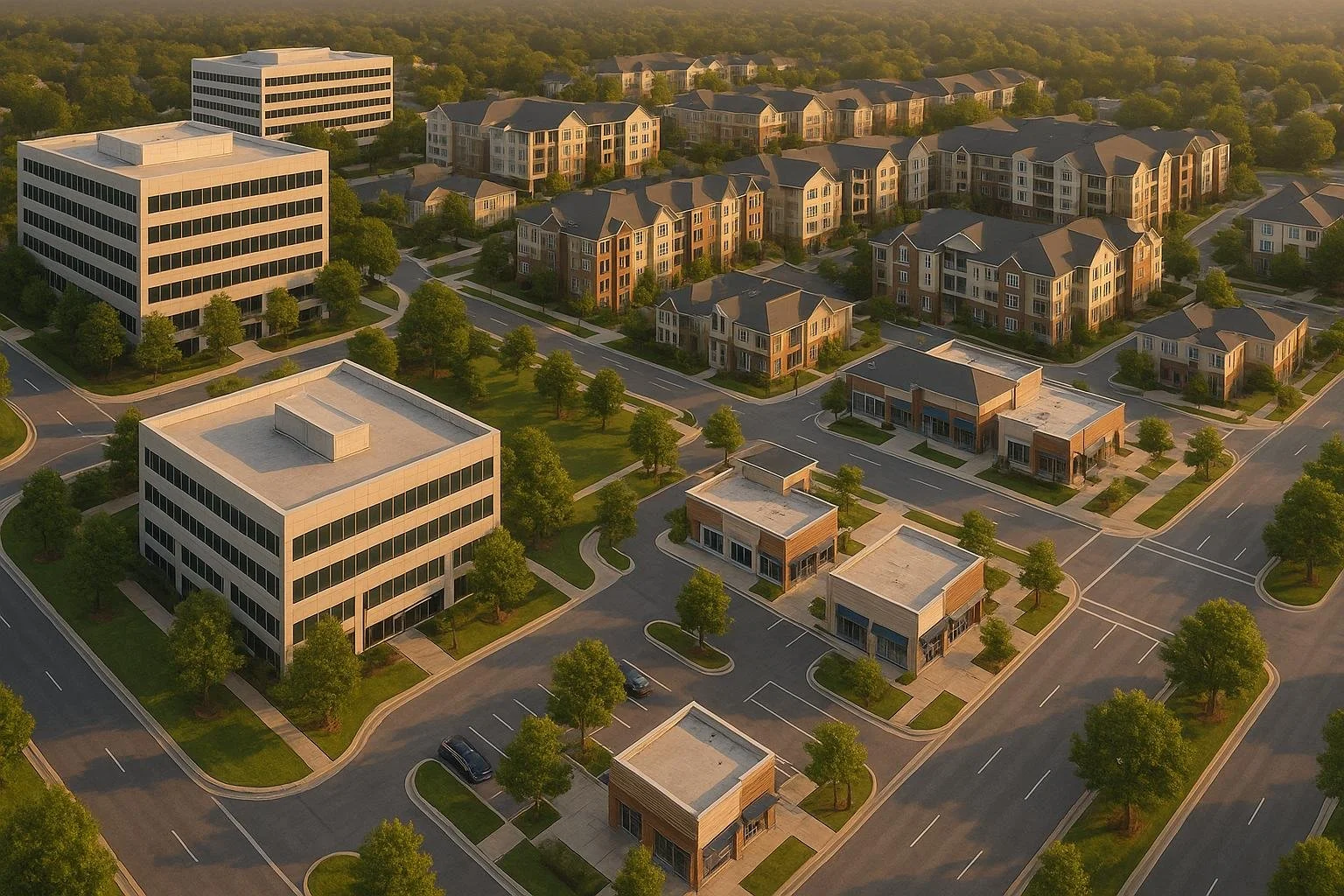
Remote work is reshaping commercial real estate (CRE), creating new opportunities for investors. Here's what you need to know:
- Office demand is shifting: Hybrid work has reduced the need for large urban office spaces. Suburban, smaller, and flexible offices are seeing more interest.
- Housing preferences are evolving: Remote workers are moving to affordable areas like the Sun Belt and Mountain West, driving demand for larger apartments, single-family rentals, and high-speed internet.
- Retail and industrial growth: Local retail centers and last-mile warehouses are thriving as people spend more time in their communities and shop online.
- Emerging property types: Extended-stay lodging and coworking spaces are gaining popularity among remote workers.
Investors should focus on markets with strong migration trends, reliable broadband, and growing industries like tech and healthcare. Prioritize properties with features that cater to remote workers, such as collaborative office layouts, coworking amenities, and residential units with home office spaces. Tools like CoreCast can help analyze data, track migration patterns, and adjust financial models to align with these trends.
The Evolution of Urban Living - How Remote Work is Reshaping Real Estate #commercialrealestate
Property Types Growing from Remote Work
As remote work continues to reshape how people live and work, certain property types are emerging as clear beneficiaries. Knowing which sectors are thriving - and why - can help you align your investments to capitalize on these shifts.
Suburban and Flexible Office Properties
The traditional downtown office tower is no longer the go-to choice for businesses. Instead, smaller, amenity-rich buildings in suburban areas are gaining traction. Companies are downsizing their urban headquarters and opting for satellite offices closer to where employees live, reflecting the growing importance of flexibility. These spaces are designed for collaboration rather than just desk work, aligning with the hybrid work model.
Modern suburban office buildings are outperforming older urban office stock. Tenants now prioritize features like high-speed internet, video-equipped conference rooms, outdoor workspaces, wellness areas, and flexible layouts that support shared desks and hoteling. Many corporations plan to reduce their office footprints by up to 50% within the next three years, which will primarily affect large urban office buildings [5].
Flexible and coworking spaces have also proven their resilience. Businesses increasingly favor these setups for their scalability, allowing them to adjust space needs quickly. For investors, this opens doors to revamping older suburban properties with amenities like coffee bars, fitness centers, bike storage, and EV charging stations.
The U.S. office vacancy rate is projected to hit 19% by 2025, with central business district (CBD) office values expected to remain about 39% below 2019 levels by 2029 [5]. In contrast, suburban offices with the right features are seeing stronger leasing activity and rent increases.
When considering suburban office investments, focus on areas with growing residential populations, easy highway access, and nearby retail and dining options. Look for buildings that can accommodate flexible leases and spec suites, reducing barriers for tenants uncertain about their long-term needs. Factor in higher budgets for tenant improvements, such as upgraded air systems, touchless access, and collaborative spaces, to make older buildings competitive for hybrid work tenants.
Apartments in Remote-Work-Friendly Areas
Multifamily properties in suburban and secondary markets are among the most resilient real estate sectors. Remote work has enabled many people to leave expensive coastal cities for more affordable areas in the Sun Belt, Mountain West, and suburban regions of major metros. Renters in these areas are looking for larger units with dedicated office spaces, dependable high-speed internet, and access to local amenities.
Today’s renters prioritize features like extra rooms or dens for home offices, soundproofing for video calls, and on-site coworking areas. High-speed broadband has become as essential as square footage in influencing rental decisions.
Build-to-rent single-family communities are particularly well-suited to meet this demand. These properties offer the space and privacy of a home without the commitment of buying, appealing to remote workers who value features like yards, garages, and quiet neighborhoods. Suburban multifamily developments with work lounges, package rooms, and community events are also drawing renters who miss the social connections their offices once provided.
When evaluating apartments in remote-work-friendly areas, focus on locations with strong population growth, diverse job opportunities, and reliable broadband infrastructure. Design or upgrade units to include dedicated workspaces, ample natural light, and dependable internet. Shared amenities like coworking spaces, reservable conference rooms, and soundproof booths can also enhance the appeal of these properties.
Be cautious of overbuilding in fast-growing markets. While remote work continues to drive demand, heavy construction activity could limit rent growth. Carefully analyze migration and employment trends when selecting submarkets. Additionally, local retail and mixed-use developments are adapting to meet the needs of these new communities.
Neighborhood Retail and Mixed-Use Properties
With remote work keeping more people at home during the day, local retail centers are evolving to meet increased community needs. Foot traffic has shifted from central business districts to suburban and neighborhood locations, benefiting grocery-anchored centers and service-focused retail spaces near residential areas. Remote workers are spending more time in their communities and frequenting local businesses for groceries, dining, fitness, healthcare, and other services.
Neighborhood retail centers are outperforming many downtown retail districts. According to J.P. Morgan’s 2025 commercial real estate outlook, multifamily, industrial, and neighborhood retail are among the most resilient sectors in today’s market [4]. Grocery-anchored centers in densely populated areas with high household incomes and population growth are particularly appealing. These properties benefit from essential spending and frequent visits that e-commerce can’t replace.
Service-oriented and experiential tenants - like fitness studios, medical offices, childcare centers, restaurants, and salons - are thriving. These businesses align well with the flexible schedules of remote workers and are less vulnerable to online competition. Mixed-use developments that combine apartments, offices, retail, and public spaces into walkable neighborhoods are also gaining popularity, catering to both daytime and evening demand.
When investing in neighborhood retail, prioritize properties with strong anchor tenants and a diverse mix of services and experiences. Avoid heavy reliance on fashion or discretionary retail, which competes with online shopping. Where possible, explore opportunities to integrate residential or flexible office components into aging retail centers, transforming them into vibrant mixed-use hubs.
Enhance the appeal of these centers with outdoor seating, public Wi-Fi, community events, and pedestrian-friendly designs. These features encourage remote workers to use the centers as social and professional gathering spaces. Use tools like mobile location data and demographic trends to identify areas where daytime population has grown significantly since 2020.
Warehouses and Last-Mile Distribution Centers
Remote work has reinforced online shopping habits, driving demand for industrial properties. Retailers and logistics companies need distribution centers close to residential areas to ensure fast delivery, making last-mile and infill warehouses highly valuable.
Industrial properties have been among the strongest performers in commercial real estate, with low vacancy rates and steady rent growth fueled by e-commerce and logistics demand [4]. Last-mile facilities in suburban areas allow for same-day or next-day delivery, cutting transportation costs and improving customer satisfaction. Smaller, infill warehouses near metro areas, including converted older buildings, are especially sought after.
Specialized spaces for returns processing, cold storage for groceries, and micro-fulfillment systems are also in demand. As remote workers spend more time at home, they’re ordering more goods online, creating a sustained need for distribution infrastructure.
When targeting last-mile and infill industrial properties, prioritize locations near dense populations and key transportation hubs like highways, ports, and rail. Be mindful of zoning restrictions and community concerns, such as traffic and noise. Evaluate the functionality of the property - features like clear heights, loading docks, and automation capabilities are critical for tenant success.
Diversify investments by considering smaller, multi-tenant industrial properties that cater to local businesses. Use demographic data to map assets relative to population clusters and analyze competing supply in each market. Beyond industrial assets, remote work has also opened up opportunities in specialized lodging.
Extended Stay and Digital Nomad Lodging
Remote work has given rise to extended-stay lodging, as workers blend travel with their professional lives. Digital nomads and remote employees are opting for longer, more frequent stays, which differ from traditional business travel patterns.
Extended-stay properties with in-room kitchens, workspaces, and reliable Wi-Fi are in steady demand. While overall hotel occupancy in August 2025 was 62.8% - still 3.2 percentage points below pre-pandemic levels - extended-stay and leisure-business hybrid segments have performed better [6]. Serviced apartments, furnished rentals, and boutique properties with coworking spaces are also popular with remote workers.
Markets with favorable climates, lower living costs, and outdoor amenities are particularly attractive for this segment. Properties offering long-stay discounts, quiet work areas, and partnerships with remote-friendly employers stand out in the market.
When investing in extended-stay lodging, focus on properties with kitchenettes and workspaces in areas with project-based employment or strong leisure appeal. Evaluate demand based on longer stays rather than short-term corporate travel. Monitor remote-work trends at major employers in the area, as these can significantly impact demand.
Tailor amenities to remote workers by ensuring fast, reliable Wi-Fi, providing dedicated work areas, and creating community programs that replicate some of the social aspects of office life. This shift in how people combine work and travel presents a unique opportunity for investors ready to adapt their properties to meet these evolving needs.
Using Data to Evaluate Remote Work Investments
Investors looking to capitalize on remote work trends need to analyze employment, migration, and financial metrics to identify sustainable opportunities. The right data helps pinpoint markets attracting remote workers, refine underwriting assumptions, and guide portfolio adjustments.
Selecting Markets Using Employment and Migration Data
Identifying markets that benefit from the shift to remote work requires a detailed look at three critical data points: remote-work intensity, employment composition, and migration flows.
- Remote-work intensity reveals how deeply remote and hybrid work models have taken hold in a metro area. By tracking remote job postings and validating trends with data from the Bureau of Labor Statistics (BLS), you can identify areas with strong demand for residential space and local services. Markets with over 30% remote-capable job postings often indicate a thriving remote-work ecosystem, even if downtown office occupancy lags.
- Employment composition reflects whether a market's job base supports long-term remote work. Use BLS data to assess the share of employment in sectors like IT, finance, and professional services - industries well-suited for remote work. Markets with growing, high-wage jobs in these sectors tend to attract remote workers who can afford higher rents and contribute to local retail growth. On the other hand, regions heavily reliant on hospitality or manufacturing may not experience the same benefits unless you're targeting industrial assets.
- Migration data shows where remote workers are relocating. By analyzing government and private migration data, you can track net in-migration at metro and county levels. Cross-referencing this with rent levels and housing supply helps avoid markets where rapid inflows have already led to unsustainable price hikes.
Combining these data layers allows you to identify "remote-work winner" markets. For instance, a secondary metro with strong net in-migration, a high percentage of remote-friendly job postings (around 35%), and employment growth in tech and finance might offer opportunities in multifamily housing, neighborhood retail, and suburban office spaces. Adding commuting and mobility data - such as mobile-device location and traffic counts - can uncover suburban nodes with increased daytime activity from hybrid workers. These areas, with sustained inflows, higher daytime populations, and steady foot traffic, are promising for multifamily and mixed-use developments. For office investments, prioritize suburban areas with stable or rising occupancy, shorter commutes, and proximity to affluent neighborhoods.
Platforms like CoreCast simplify this process by integrating employment, migration, and financial data into a unified map. This consolidated view helps you focus on submarkets with the strongest remote-work trends, streamlining analysis and eliminating the need for juggling multiple data sources.
Adjusting Financial Models for Remote Work Effects
Once you've identified promising markets, it's essential to adjust financial models to reflect remote work's impact on rents, occupancy rates, lease terms, and capital expenditures.
- Office properties face significant challenges. The U.S. office vacancy rate is expected to reach about 19% by 2025, far above pre-pandemic levels. In New York City, office property values are projected to remain roughly 39% below 2019 levels by 2029 [5]. For traditional central business district (CBD) offices, adjust stabilized occupancy assumptions to 75%-85% (down from the pre-COVID norm of 90%-95%), extend lease-up periods, and account for higher tenant improvement costs and leasing commissions. Free rent concessions, which increased from 6.8 to 10.1 months post-pandemic [5], should also be factored in.
- Suburban and flexible office spaces in strong hybrid work markets may offer better prospects. If data shows demand for smaller, amenity-rich offices near residential areas, you can project more stable rent growth and occupancy rates. However, shorter lease terms and built-in flexibility preferred by tenants could increase rollover risks and re-leasing costs.
- Multifamily properties in remote-work destination markets often support more optimistic projections. In metros with strong in-migration and remote-friendly employment, you can underwrite rent growth above national averages during the early years of your investment. Still, monitor construction activity in fast-growing regions like the Sun Belt, as an oversupply could temper rent increases.
- Industrial and last-mile assets benefit from the e-commerce surge fueled by remote work. Strong demand, particularly in infill markets with limited supply, supports healthy occupancy and rent growth. According to J.P. Morgan's 2025 commercial real estate outlook, multifamily, retail, and industrial sectors are expected to remain resilient [4].
- Neighborhood retail properties serving local daily needs in remote-heavy areas can maintain stable occupancy and modest rent growth. In contrast, CBD retail, reliant on office worker traffic, may face slower recovery. Retail is forecasted to start 2025 with the lowest vacancy rate among major commercial real estate types [5].
Capital expenditure budgets should also reflect the demand for remote-work-friendly amenities. Office spaces may need investments in collaborative layouts, touchless systems, enhanced HVAC, and shared amenities. Multifamily properties could require coworking lounges, upgraded Wi-Fi, soundproofing, and package rooms. Converting older offices to residential or mixed-use purposes often involves significant structural and compliance upgrades, so budget for these as staged expenditures with contingencies.
To account for uncertainty, build scenario-based models with at least three paths: a base case with moderate hybrid adoption, a downside scenario with higher remote adoption and deeper office declines, and an upside scenario with successful asset repositioning and stronger growth in industrial and multifamily sectors. Tools like CoreCast can automate scenario modeling and visualize how cash flows and asset values shift under different conditions.
Rebalancing Portfolios to Reduce Risk
With updated financial models, it’s time to reassess your portfolio and address emerging risks. Examine your exposure by property type and submarket to identify vulnerabilities. For example, portfolios heavily weighted toward older, less-amenitized Class B or C office buildings in weaker CBDs may face prolonged vacancies and declining rents, especially as hybrid work policies now dominate among 80% of office tenants [5].
A clear trend in the office market is the "flight to quality." Tenants are downsizing their overall space but upgrading to high-quality, amenity-rich Class A buildings in prime locations. By 2027, prime office vacancy is expected to improve to approximately 8.2% [5].
sbb-itb-99d029f
Using Technology to Improve CRE Investment Decisions
The rise of remote work has completely shifted how investors evaluate commercial real estate (CRE) opportunities. Gone are the days when juggling spreadsheets and scattered reports was enough. Today, investors need to track hybrid work adoption rates, analyze migration trends, assess neighborhood amenities, and evaluate building technology readiness - all while conducting traditional financial analysis. This level of complexity calls for a unified technology platform that integrates data, analysis, and decision-making in one place. Such a platform can transform how investors identify opportunities, underwrite deals, and manage risk, enabling more precise underwriting, efficient deal tracking, and better portfolio management.
End-to-End Platform for CRE Analysis
A comprehensive real estate intelligence platform streamlines every stage of the investment process - from initial market research to ongoing portfolio management. This unified approach is especially critical in understanding how remote work trends, migration patterns, and property performance intersect across various asset classes.
Take CoreCast as an example. This platform supports underwriting across all asset types - whether it's a suburban flex office, a last-mile industrial property, or a multifamily development in a remote-work-driven market. Investors can load multiple asset classes, model remote work scenarios, and seamlessly track opportunities from underwriting to closing. There’s no need for separate systems to handle different property types or investment stages.
The platform’s underwriting tools are particularly useful for navigating remote-work strategies. For instance, if you’re evaluating a suburban office property in a market attracting hybrid workers, you can adjust rent growth projections, tweak free rent periods, or increase tenant improvement budgets to stay competitive. For an industrial asset benefiting from the e-commerce boom, you can model higher occupancy rates and stronger rent escalations. CoreCast’s scenario modeling tools let you compare different projections - base, optimistic, and downside cases - side by side. For example, you can see how a 300 basis point change in office vacancy compares financially to a slight dip in industrial demand. This level of analysis helps you align your risk profile with your investment goals.
Pipeline tracking is another key advantage when pursuing remote-work-driven opportunities in rapidly shifting markets. For example, distressed CBD office buildings may hit the market while suburban flex spaces lease faster than anticipated. CoreCast’s pipeline tools allow investors to filter deals by stage, asset type, remote-work exposure, or target return. You can search for specific criteria like “suburban office within 30 miles of major remote-worker migration markets” or “small-bay industrial within 10 miles of residential growth,” and instantly view their status, expected returns, and capital needs. With all documents, financial models, and team notes stored in one place, collaboration becomes easier, even across time zones, speeding up the process from initial evaluation to investment committee approval.
Visualizing data spatially is just as important. CoreCast’s map view overlays potential or owned properties with existing and planned competing assets, nearby housing density, transportation links, and local amenities like retail and schools. This feature helps you evaluate commute sheds and proximity to residential clusters, ensuring that a property’s location aligns with remote worker patterns. For suburban office, neighborhood retail, or last-mile industrial strategies, this insight is invaluable.
Portfolio analysis tools take it a step further by offering dashboards that break down exposure by sector and geography. You can tag assets by sector, market type, and remote-work sensitivity, then use dashboards to assess income concentration and risk. This data-driven approach enables deliberate portfolio rebalancing rather than reactive decision-making.
CoreCast also simplifies stakeholder communication. Its reporting tools allow for consistent, concise updates on occupancy, rent, and market valuations, making it easier to share insights with investors, lenders, and partners. By reducing reliance on scattered spreadsheets and email chains, the platform shortens decision cycles and builds confidence in capital allocation toward remote-work-aligned strategies.
"Our family office needed a solution to manage legacy real estate assets. They have been instrumental to streamline our valuation and underwriting processes." - James Gueits, Principal, MHP Operator
Connecting Data Sources for Better Insights
Integrating internal analytics with external market data is essential to fully understand remote work’s impact. Demand driven by remote work closely ties to labor markets and migration trends, making third-party data integration a must for effective market selection. Platforms like CoreCast can connect external data sources - such as employment trends, industry-specific job growth, migration patterns, rent and vacancy rates, and construction pipelines - into a single view. This allows investors to identify markets where remote work is driving housing and retail demand while office demand stabilizes or declines.
For example, a dashboard might highlight U.S. metros with strong inbound migration of high-income remote workers, rising multifamily rents, and robust industrial absorption, even if CBD office demand remains weak. This integrated approach eliminates the need to manually compile reports from sources like the Bureau of Labor Statistics or private migration data providers. Instead, all relevant data flows into one platform, where it can be analyzed alongside your deal pipeline and portfolio.
Tracking employment and migration data also helps uncover "remote-work winner" markets before they become oversaturated. By monitoring remote job postings, employment composition in remote-friendly sectors like IT and finance, and net in-migration at metro and county levels, investors can spot emerging opportunities early. Cross-referencing this data with rent trends and housing supply prevents overpaying in markets where demand has already driven prices too high.
While CoreCast isn’t designed for property management or bookkeeping, it integrates with property management systems to provide a more complete view of operations and investments. Real-time data on occupancy, rent collections, work orders, and operating expenses flows directly into investment analytics, updating key performance indicators at both the asset and portfolio levels. For example, an office owner noticing declining occupancy in specific CBD properties can use this data to rework business plans, budget for tenant improvements, or even consider partial conversions to alternative uses. Conversely, strong collections and low turnover in multifamily or neighborhood retail properties might justify more aggressive rent growth assumptions in financial models. This integration ensures that operational insights directly inform long-term investment strategies.
By combining internal operational data with external market intelligence, investors gain a complete picture of their portfolio’s performance. This helps distinguish between temporary fluctuations and meaningful shifts in demand caused by remote work.
Future upgrades, including AI-driven automation and advanced reporting, will further simplify analysis and decision-making. As remote work continues to reshape CRE, platforms that integrate diverse data sources, model complex scenarios, and track opportunities efficiently will set successful investors apart.
"They have seamlessly provided the expertise and support we needed to streamline our operations and make smarter, data-driven decisions." - Clay Heighten, Principal, Caddis Healthcare RE
To implement a platform like CoreCast, start by importing your existing portfolio and historical deals, tagging them by asset type, geography, and remote-work exposure. Next, integrate key data sources - like market data providers, property management feeds, and internal financials - and standardize underwriting templates across asset classes. Deal teams can then use the platform as their central hub for new opportunities, while asset managers monitor performance and update business plans. Over time, this shared environment reduces reliance on fragmented tools, speeds up decision-making, and builds confidence in strategies aligned with remote work trends.
Conclusion: Finding Opportunities in the Remote Work Era
The rise of remote work has reshaped the commercial real estate (CRE) landscape in ways that are here to stay. Research from McKinsey and JLL highlights that hybrid and flexible work arrangements have become the norm, with companies now planning for only 30–50% office occupancy. This shift has reduced the amount of office space needed per employee, fundamentally altering demand [1][3]. For CRE investors, this isn’t just a story of declining office demand - it’s about identifying emerging opportunities and adjusting portfolios to align with these new realities.
Markets that attract remote workers - like Sun Belt metros, suburban hubs, and so-called "Zoom towns" - are seeing steady demand for multifamily housing, neighborhood retail, and flexible office spaces. Additionally, last-mile industrial properties continue to thrive, fueled by the growth of e-commerce, a trend accelerated by remote work. According to the National Association of Realtors, as of October 2025, urban commercial demand remains about 3% below pre-pandemic levels. This decline is largely attributed to "lingering remote work trends", which continue to challenge downtown markets [2]. For investors, this creates a divided market: the focus should remain on high-quality, well-located, amenitized properties, while outdated office spaces may need to be repositioned or repurposed.
To navigate this evolving landscape, investors must keep a close eye on migration patterns, key employment sectors, vacancy rates, and rent growth. J.P. Morgan’s 2025 midyear outlook underscores the resilience of multifamily, retail, and industrial segments, which have benefited from lifestyle changes driven by remote work [4]. Leveraging tools like CoreCast - a real estate intelligence platform that integrates underwriting, pipeline tracking, and analytics - can help investors make data-driven decisions. By analyzing external market trends alongside internal portfolio performance, they can model remote work scenarios and make proactive adjustments before these trends fully solidify.
Clear strategies emerge from these insights. Investors should reallocate office exposure toward higher-quality assets in stable markets and explore adaptive reuse or discounted acquisitions for underperforming properties. Using migration and employment data, they can zero in on markets benefiting from remote work and focus investments on multifamily housing, neighborhood retail, and flexible office spaces in those areas. Additionally, prioritizing features like collaboration spaces, wellness amenities, and advanced technology infrastructure can make properties more appealing for hybrid work setups. Flexible leasing models - such as short-term options, coworking spaces, and scalable solutions - can also attract tenants navigating fluctuating headcounts and hybrid schedules [1][3][7].
FAQs
What are the best ways for CRE investors to identify opportunities in markets influenced by remote work trends?
To spot markets with potential influenced by remote work trends, commercial real estate (CRE) investors should focus on regions seeing population increases tied to remote work flexibility. These are often suburban or secondary markets offering more affordable housing, a high quality of life, and infrastructure suited for remote workers.
Examining local economic indicators - like changes in the job market or rising demand for coworking spaces - can reveal additional opportunities. Tools like CoreCast can be especially helpful, enabling investors to monitor market data, evaluate competitive conditions, and predict potential returns. These insights are essential for navigating this shifting landscape effectively.
What property features appeal most to remote workers, and how can investors adapt their portfolios to meet these needs?
Remote workers tend to seek homes that cater to their unique needs. Features like dedicated home office spaces, dependable high-speed internet, and outdoor areas such as patios or balconies often top their list. Being close to conveniences like coffee shops, coworking spaces, and fitness centers also adds to a property's appeal.
For investors, this means focusing on properties with layouts that can easily accommodate home offices or upgrading spaces with features like soundproofing and smart home technology. Investing in locations with strong broadband infrastructure and adding shared amenities - think meeting rooms or quiet zones - can also make a property stand out to this growing segment of renters and buyers.
How can CRE investors adapt their financial models to reflect the effects of remote work on various property types?
Remote work trends are changing the game for property demand, and commercial real estate (CRE) investors need to rethink their financial strategies. Office spaces, for instance, may face lower occupancy rates and a growing interest in flexible lease options. Retail properties could experience a shift in tenant mix as e-commerce continues to thrive, while industrial spaces - like warehouses - might see a boost thanks to the rising need for logistics and distribution hubs.
When revising financial models, it's crucial to pay attention to local market dynamics, tenant behaviors, and the rise of hybrid work models. Including scenario analysis can help prepare for shifts in demand and rental income. Tools like CoreCast can simplify this process by offering real-time data insights, portfolio analysis, and forecasting features, helping investors make smarter decisions in an evolving market.