
Regulatory Compliance for Construction Projects
Regulatory compliance in construction ensures projects meet federal, state, and local laws, safeguarding safety, finances, and reputation. Non-compliance risks include fines (up to $145,027 per violation), stop-work orders, and legal action. This guide covers key compliance areas:
- Federal Rules: OSHA standards (e.g., fall protection, scaffolding), updated safety measures (e.g., lighting, silica exposure), and labor laws (e.g., minimum wage, overtime pay).
- State/Local Codes: Building codes vary by region, with California and New York introducing stricter energy and construction standards in 2026.
- Environmental Rules: Stormwater management, hazardous waste handling, and energy-efficient construction are regulated.
- Technology Role: Digital platforms streamline compliance tracking, reduce errors, and improve audit readiness.
Lecture 7A Regulatory Requirements, Introduction to Construction
sbb-itb-99d029f
Federal Regulations for Construction Projects
Federal regulations set the groundwork for safety and labor standards in construction projects across the U.S. Two key players in enforcing these rules are OSHA (Occupational Safety and Health Administration) and the Wage and Hour Division of the U.S. Department of Labor. Each agency focuses on specific aspects of compliance, from workplace safety to fair labor practices [4][10].
OSHA Safety Standards
OSHA's construction rules are outlined in 29 CFR Part 1926, which applies to construction, alteration, and repair work [8].
Some safety violations occur more often than others, highlighting areas where construction companies often fall short. As of late 2020, the top five OSHA citations included: Fall Protection – General Requirements (1926.501), Scaffolding (1926.451), Ladders (1926.1053), Fall Protection – Training (1926.503), and Eye and Face Protection (1926.102). These violations reveal ongoing risks that jeopardize worker safety [4].
Key sections of OSHA standards include:
- Subpart M: Requires guardrails, safety nets, or personal fall arrest systems for vertical drops of six feet or more.
- Subpart L: Covers scaffolding, including design, construction, load capacities, and access requirements.
- Subpart P: Mandates protective systems like shoring, shielding, or sloping for excavations to prevent cave-ins.
- Subpart CC: Outlines rules for cranes and derricks, emphasizing operator certification, ground conditions, and proper assembly [4][5].
OSHA frequently updates its regulations to address new workplace challenges. For instance, on July 1, 2025, OSHA revised Construction Illumination (1926.800), introducing updated lighting requirements for underground and general construction areas [7]. The 2026 Code of Federal Regulations also added sections on COVID-19 (1926.58) and Respirable Crystalline Silica (1926.1153), reflecting a focus on respiratory health and disease prevention [5][6].
To promote workplace safety, Section 1926.21 requires employers to train workers on recognizing and avoiding unsafe conditions [5]. On multi-employer sites, OSHA's Multi-Employer Citation Policy assigns specific responsibilities to "creating", "exposing", "correcting", and "controlling" employers, ensuring accountability for safety violations [4]. Additionally, regular equipment inspections by a competent person are critical, particularly for cranes and wire ropes under Subpart CC [5].
While OSHA ensures jobsite safety, the Fair Labor Standards Act (FLSA) focuses on protecting workers' rights and pay.
Fair Labor Standards Act (FLSA)
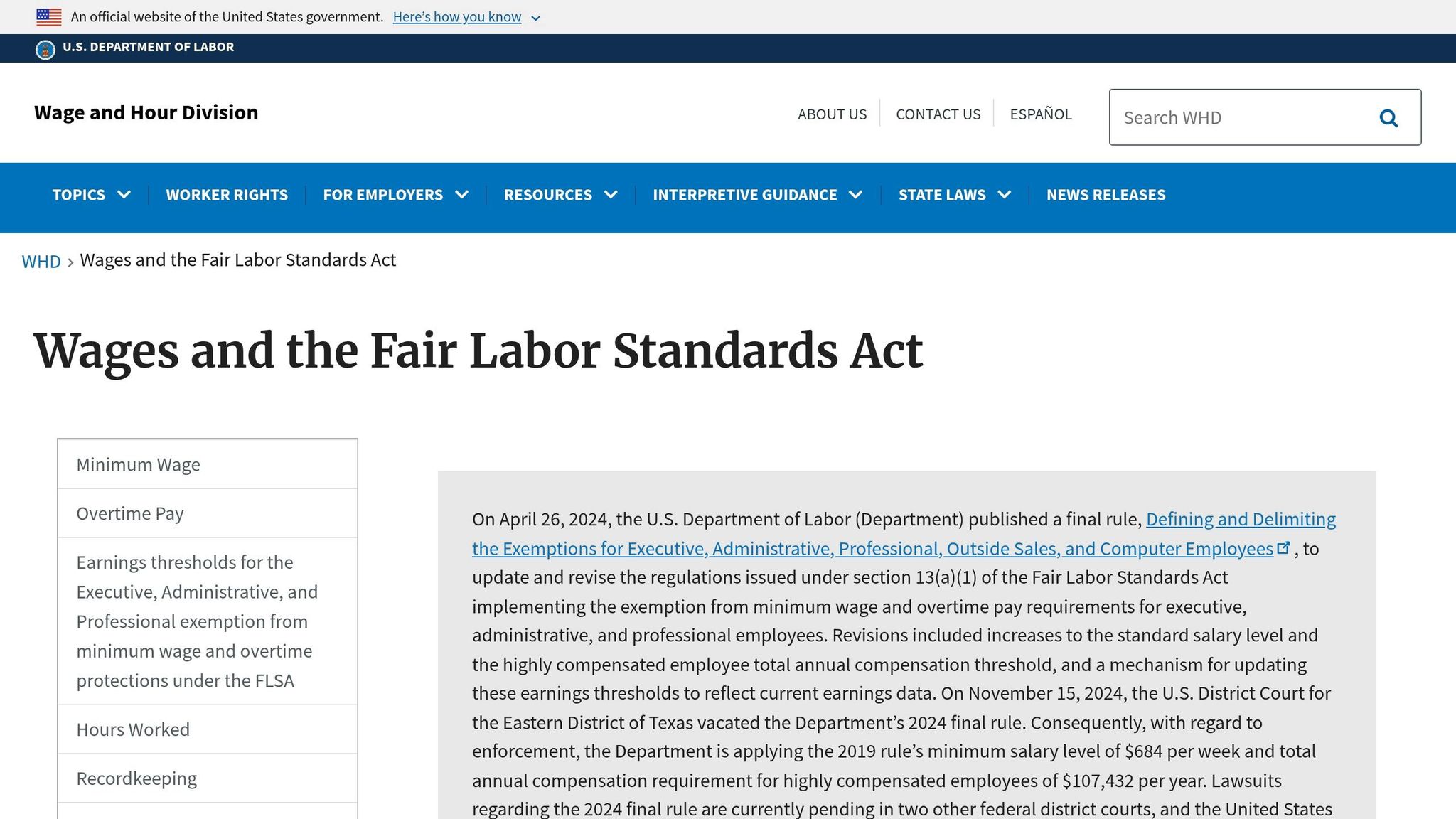
Federal labor laws also regulate pay and worker classification. The FLSA sets the rules for minimum wage, overtime pay, and employee status. Any firm with at least two employees and $500,000 in annual revenue falls under its jurisdiction, which includes nearly all construction workers [9][11].
Currently, the federal minimum wage is $7.25 per hour, but workers on federal contracts must earn $17.20 per hour starting in 2025 [9][11]. Overtime pay is calculated at 1.5 times the regular hourly rate for hours worked over 40 in a single seven-day workweek. Missteps often occur when contractors mistakenly calculate overtime based on bi-weekly pay periods instead of adhering to a strict weekly framework [11].
Another common issue is worker classification. Misclassifying employees as independent contractors to avoid paying minimum wage or overtime can lead to hefty fines and back-pay liabilities [9][10]. Employers also need to account for all "hours worked", which include pre-shift tasks, multi-tasking roles, and job-related travel between sites [11].
Following a 2024 federal court decision that blocked proposed salary threshold increases, the current overtime-exempt threshold remains at $35,568 annually ($684 per week) [11]. Construction firms should carefully evaluate whether project managers and supervisors meet this exemption. Companies with effective payroll systems report 23% fewer project delays, proving that proper wage compliance not only avoids penalties but also supports smoother operations [11].
State and Local Compliance Requirements
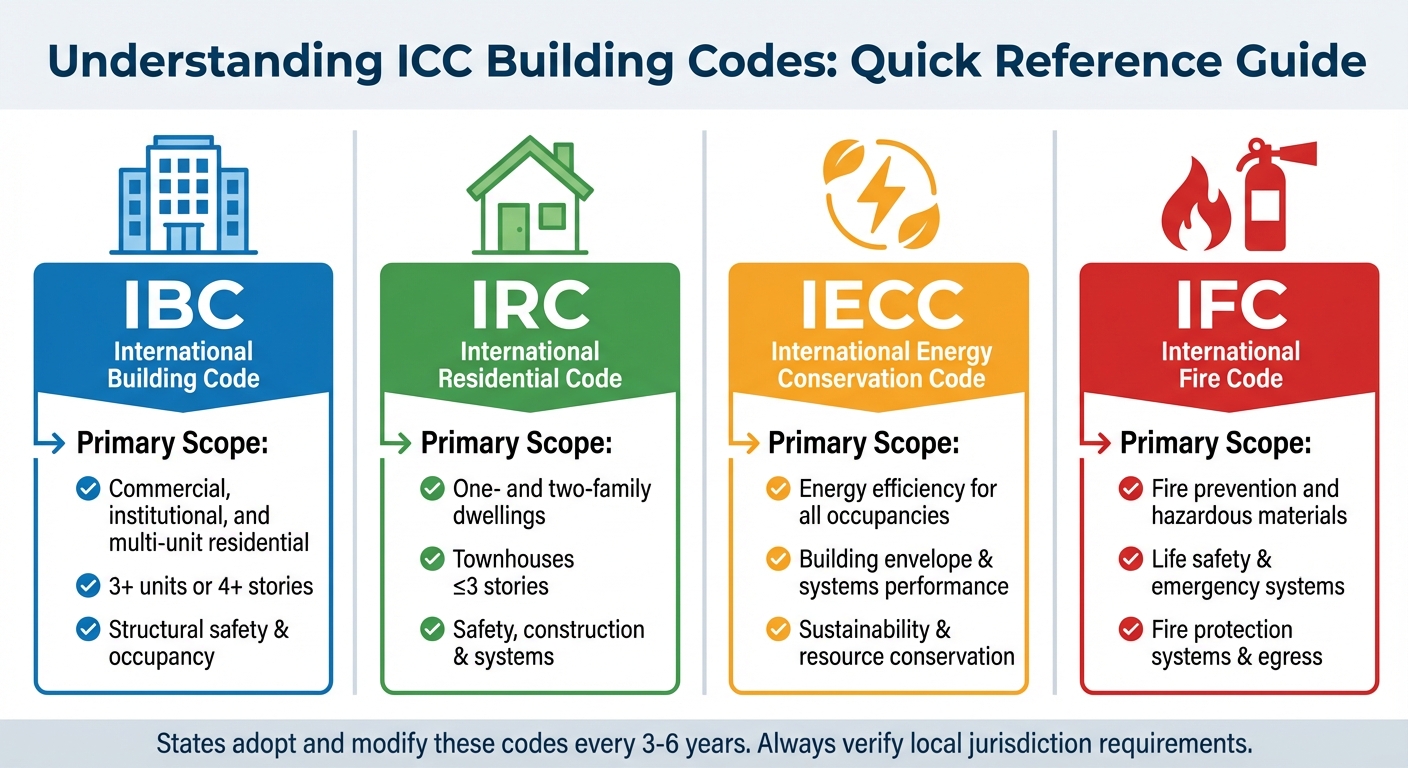
ICC Building Codes Comparison: IBC vs IRC vs IECC vs IFC Scope and Applications
Federal regulations may set the stage for safety and labor standards, but state and local codes dictate the specifics of what can actually be built and how. The U.S. operates within a three-tiered system: national organizations create model codes, states adopt and modify them, and local jurisdictions enforce these codes through permits and inspections [13]. This layered approach means a project approved in one city could face rejection in another, even within the same state. Navigating these localized requirements demands a tailored approach for each jurisdiction.
Building Codes by State and City
Most states, along with the District of Columbia, base their regulations on the ICC's I-Codes [13]. However, states don’t simply adopt these codes as-is. They update them every three to six years to address specific regional challenges, such as hurricanes in Florida, earthquakes in California, or heavy snow in Colorado [12][17].
California's Title 24 stands out as one of the most detailed state codes. It includes the California Building Code (CBC), the California Residential Code (CRC), and CALGreen standards for sustainability [15]. With over 12.2 million housing units, California enforces some of the strictest zoning and building regulations in the U.S. Starting January 1, 2026, the state’s updated Energy Code will require all new multifamily buildings to be EV-ready with Level 2 charging receptacles. Additionally, the state is targeting six million homes to switch to electric heat pumps by 2030 [18][15].
The gap between model code updates and state adoption often spans six to eight years [13]. This delay means projects may need to comply with older codes even when newer ICC editions are available. Local jurisdictions add another layer by enforcing state codes while introducing stricter ordinances - though they cannot be less stringent than state minimums [13]. It’s crucial to consult local building department websites for requirements like higher fire sprinkler thresholds, stricter energy provisions, or unique zoning rules that go beyond state standards [13][14].
| Code Type | Full Name | Primary Scope |
|---|---|---|
| IBC | International Building Code | Commercial, institutional, and multi-unit residential (3+ units or 4+ stories) |
| IRC | International Residential Code | One- and two-family dwellings; townhouses ≤3 stories |
| IECC | International Energy Conservation Code | Energy efficiency for all occupancies |
| IFC | International Fire Code | Fire prevention and hazardous materials |
Understanding these variations is key to managing the permit process effectively.
How to Navigate the Permit Process
The permit process generally involves several stages: pre-application research, plan preparation, submission, review and corrections, permit issuance, phased inspections, and finally, the Certificate of Occupancy [17]. Timelines can vary significantly depending on the project. Minor residential work might take one to three weeks, while larger commercial projects could stretch to eight to twenty weeks or more [17].
"Expecting your internal team to be experts on the local ordinances of every city and county in the country is unrealistic." - Michael Robinson, Permit Place [16]
Before finalizing designs, it’s essential to review local guidelines for permit-specific requirements to avoid costly revisions [16]. Keep in mind that building permits only cover code compliance. Additional approvals may be required for zoning, environmental impact, fire marshal standards, and health department regulations [13]. Urban areas often involve multiple review departments - such as planning, fire, and public works - which can extend timelines. In contrast, rural counties may have simpler rules but provide less guidance [17].
To streamline the process, consider using a centralized digital system to track documents, deadlines, and permit statuses [16]. Implement a quality control step where someone not involved in the initial plan preparation reviews submittals for missing signatures or outdated forms before filing [16]. For projects in unfamiliar jurisdictions, hiring permit expediters can be invaluable. These professionals often have established relationships with local officials and a deep understanding of specific municipal preferences [16]. Staying proactive by monitoring permit status and responding quickly to corrections helps maintain momentum [16][17].
Construction isn’t legally complete until a Certificate of Occupancy is issued, confirming the building’s safety after a final inspection [17][13]. While some jurisdictions still require physical plans, many now accept digital submissions [16]. Lastly, always verify which specific edition of the IBC or IRC your jurisdiction has adopted, as states frequently amend individual sections or exempt certain occupancy types [13]. Incorporating these strategies into your compliance framework ensures smoother project execution and strengthens your reputation.
Environmental and Sustainability Compliance
Construction projects must adhere to strict environmental regulations aimed at protecting water, air, and natural habitats. For example, the Clean Water Act (CWA) mandates that construction activities disturbing one acre or more - or smaller areas part of a larger development - must secure a National Pollutant Discharge Elimination System (NPDES) permit [19][20]. Non-compliance can lead to steep daily fines, such as $54,833 under the CWA or $74,552 under the Resource Conservation and Recovery Act (RCRA) [21]. These rules cover areas like stormwater management, waste disposal, and energy efficiency.
Stormwater Management and Waste Disposal
Before breaking ground, contractors must file a Notice of Intent (NOI) through the EPA's NPDES eReporting Tool at least 14 days in advance [20]. They also need to create a Stormwater Pollution Prevention Plan (SWPPP), which pinpoints pollutant sources (e.g., sediment, chemicals, oil) and outlines erosion and sediment control measures [20][21]. If construction halts for over 14 days, disturbed soil must be stabilized immediately [19]. Additionally, wastewater from materials like concrete washouts, paint, or form release oils must be contained and cannot be discharged freely [19].
The RCRA oversees the handling of hazardous waste, including lead, asbestos, and solvents. Many construction companies fall under the category of Conditionally Exempt Small Quantity Generators (CESQGs), producing 100 kg or less of hazardous waste monthly [21]. Violations can lead to severe consequences. For instance, in 2021, Alabama penalized a contractor for illegal open burning of imported vegetation, citing Clean Air Act violations with potential fines of $25,000 per day [21]. Likewise, Vermont mandates recycling of leftover materials like wood and scrap metal for larger projects, reducing landfill waste [21].
"Persons commencing work on such a project before obtaining the required permits, and any contractors engaged in such work, are subject to enforcement actions by the DEC" - New York Department of Environmental Conservation [21]
Energy Efficiency Standards
Energy efficiency requirements are now a major factor in shaping sustainable construction. For instance, California's Energy Code (Title 24), which takes effect on January 1, 2026, requires new multifamily buildings to include infrastructure for electric vehicle charging and adopt energy budgets prioritizing heat pump technologies [23][24]. These updates are expected to save $4.8 billion over 30 years and cut greenhouse gas emissions by about 4 million metric tons - comparable to the annual energy consumption of over 500,000 homes [24]. Since 1975, California's energy standards have saved residents over $200 billion [24].
Builders can comply using either the Prescriptive Method, which involves meeting specific design standards, or the Performance Method, which uses modeling tools like EnergyPro or CBECC-Com to achieve similar results [25]. Starting July 2024, CALGreen checklists will also address water conservation, construction waste management, and embodied carbon, further promoting sustainable practices [22].
"Energy efficiency is the quiet workhorse of the clean energy transition. Efficiency reduces Californians' bills, improves their health and comfort, and reduces strain on the electricity grid" - Commissioner Andrew McAllister, California Energy Commission [24]
To avoid delays, contractors should finalize window U-factors, HVAC efficiency ratings, and other energy-related details before submitting permits. Additionally, promptly updating energy reports after plan changes helps prevent inspection issues [25]. These steps ensure alignment with all regulatory requirements, supporting a project's overall compliance efforts.
Using Technology for Compliance Management
Technology has become a game-changer in managing the complex web of regulatory requirements for construction projects. Relying on outdated methods to oversee compliance across multiple sites introduces unnecessary risks. Expired permits, lapsed certifications, or misplaced environmental reports can bring projects to a standstill. Digital platforms tackle these issues head-on by centralizing and automating compliance processes, creating a more efficient and reliable system.
Industry leaders using these platforms have reported a 60% faster response time to audits [27]. Teams can quickly pull up permits, safety inspections, or environmental reports when needed. Additionally, these systems help reduce documentation errors by 85%, significantly cutting down costly mistakes that could lead to regulatory penalties [27].
Modern compliance platforms shift the approach from reactive to proactive. Automated alerts notify teams when certifications or permits are nearing expiration, reducing the risk of missed deadlines and project delays. Mobile apps allow real-time data collection from job sites, ensuring that safety inspections and incident reports are logged immediately [26][27].
Building a Compliance Tracking System
A well-designed compliance tracking system centralizes all critical documents - permits, certifications, safety records, and environmental reports - into a secure digital repository. Role-based access ensures sensitive information is protected, while authorized personnel can easily access records during inspections [26].
To avoid adding unnecessary administrative tasks, the system should integrate seamlessly into daily workflows. For instance, when a project reaches a milestone, the platform can automatically initiate compliance checks. This might involve verifying stormwater management protocols before site work begins or confirming energy efficiency calculations before submitting building permits [26].
CoreCast offers a prime example of this integrated approach. Its end-to-end real estate intelligence platform connects permit deadlines, inspection schedules, and regulatory documentation with project timelines and financial data. This centralized structure allows teams to monitor compliance across their portfolio and address potential issues before they escalate.
Another significant advancement is automated code verification. When paired with Building Information Modeling (BIM), platforms can evaluate designs against local building codes and safety standards during the design phase. This proactive measure can cut the time spent on compliance reviews by 60% [27].
Reporting and Forecasting Tools
Digital platforms don’t just track compliance - they simplify reporting. Regulatory agencies often require detailed, organized documentation, and automated reporting tools make this process seamless. These platforms generate professional compliance reports instantly, complete with timestamped records and digital signatures that meet audit standards [28][3]. With complete, timestamped audit trails, teams can provide inspectors with a clear history of safety measures, environmental monitoring, and permit renewals without scrambling for scattered records [26][1].
CoreCast’s reporting tools go beyond basic documentation. Its analytics capabilities reveal patterns across projects, such as recurring delays due to specific regulatory requirements or sites struggling with particular safety protocols. Armed with this data, firms can allocate resources more effectively and address recurring issues before they become major problems.
Some platforms even use AI-powered predictive analytics to identify potential compliance risks [27]. By analyzing historical data, these systems highlight patterns - like frequent missed inspection deadlines or inconvenient clusters of worker certification renewals - allowing teams to take corrective action in advance.
Switching to digital compliance management isn't just about avoiding penalties; it’s about streamlining operations at every stage of a project. Automated systems can reduce verification time by up to 80% [27], enabling teams to focus more on construction and less on paperwork. This not only minimizes delays and cuts costs but also ensures that every compliance requirement is met efficiently.
2026 Construction Compliance Checklist
In 2026, staying on top of federal, state, and local regulations is crucial for construction projects. This checklist highlights key compliance actions for easy reference. As Lipsa Pati from oConstruction puts it:
"In 2026, if it is not documented, it legally does not exist" [3].
Federal OSHA Standards
- Personal Protective Equipment (PPE): Ensure workers have properly fitted PPE like helmets, harnesses, and gloves, as per 29 CFR 1926.95 [2].
- Heat Illness Prevention: Follow OSHA's updated rules, which include shaded rest areas, access to potable water, and acclimatization protocols.
- Recordkeeping: Maintain OSHA Forms 300 (injury log), 300A (annual summary), and 301 (incident reports). Post Form 300A from February 1 to April 30 annually [29][30].
- Incident Reporting: Report fatalities within 8 hours and hospitalizations, amputations, or eye loss within 24 hours [29][34].
- Penalties: Be aware that serious violations can result in fines up to $16,550, while willful violations may reach $165,514 [31][32].
Labor and Sourcing Compliance
- Form I-9 Updates: Use the updated electronic Form I-9 by July 31, 2026, noting it will expire on May 31, 2027 [32].
- Domestic Product Requirements: For federal highway projects, ensure manufactured products meet the 55% domestic content test effective October 1, 2026 [2].
- Wage Changes: In California, the minimum wage rises to $16.90 per hour on January 1, 2026, with the exempt salary threshold increasing to $70,304 annually [32].
State and Local Mandates
- New York: The All-Electric Buildings Act bans fossil fuel hook-ups in new low-rise buildings starting January 1, 2026 [2].
- California: The 2025 Title 24 code (effective January 1, 2026) requires new commercial kitchens to be "electric-ready" and mandates battery storage for solar installations [2].
- Energy Efficiency: States are encouraged to adopt the 2024 International Energy Conservation Code by the end of 2026, which improves efficiency by 7% to 8% compared to the 2021 edition [2].
Environmental Monitoring
- Air, Water, and Noise: Use PM10/PM2.5 sensors for air quality, turbidity meters for runoff, and sound level meters for noise control [33].
- Stormwater Management: Maintain a Stormwater Pollution Prevention Plan with regular contaminant testing [33].
- Emission Tracking: Monitor CO2 emissions through machinery telematics [33].
- Material Sustainability: Request Environmental Product Declarations from suppliers during the bidding phase [33].
- Digital Audit Trails: Use timestamped, location-based records to meet regulatory standards [3].
This checklist serves as a roadmap to help construction professionals navigate the complex compliance landscape in 2026. By prioritizing documentation and staying proactive, teams can avoid costly penalties and ensure smooth project execution.
Conclusion
Compliance has become a critical factor for competitiveness and growth in the construction industry. By 2026, it will define whether a company can secure contracts, compete effectively, and achieve lasting success. As Lipsa Pati from Oconstruction.io aptly puts it:
"In 2026, construction companies will not compete only on cost, speed, or scale. They will compete on trust, governance, and compliance maturity" [3].
This guide explored key areas like OSHA safety standards, labor laws, environmental mandates, and state-specific regulations. Overlooking these can lead to hefty fines and significant project delays - making compliance non-negotiable.
Technology now plays a crucial role in simplifying compliance management. Manual methods, like checklists and spreadsheets, fall short of providing the timestamped, location-specific documentation regulators demand. Modern digital platforms consolidate permits, certifications, safety logs, and financial records into one reliable system. This not only minimizes human error but also enables real-time risk monitoring.
For example, platforms like CoreCast (https://corecastre.com) offer comprehensive solutions that combine compliance tracking with project oversight and financial forecasting. These tools streamline operations while ensuring adherence to regulatory requirements.
A strong compliance record brings tangible benefits: lower insurance premiums, access to enterprise-level contracts, and smoother project execution. By adopting a proactive, technology-driven approach, construction firms can transform compliance into a cornerstone of their success - building trust and ensuring growth in an increasingly regulated landscape.
FAQs
Which OSHA rules apply to my jobsite?
OSHA regulations for construction sites focus on critical areas like fall protection, hazard communication, injury and illness recordkeeping, and site safety standards. These requirements are detailed in 29 CFR Part 1926, which serves as the go-to regulation for maintaining safety in the construction industry. Following these rules is essential to ensure both a safe workplace and compliance with legal standards.
What permits do I need before breaking ground?
Before beginning construction, it's crucial to obtain the required building permits from your local government. These permits ensure your project meets safety standards, building codes, and zoning laws. Some commonly needed permits include general building permits, stormwater discharge permits, and permits related to environmental considerations. To avoid legal or financial setbacks, reach out to your local building department early in your planning process to confirm what's needed.
How can I prevent missed deadlines and audit issues?
To steer clear of missed deadlines and potential audit troubles, prioritize planning ahead and keeping your documentation well-organized. Stay on top of safety, financial, and other regulatory requirements by maintaining thorough records of inspections, certifications, and training sessions. Make it a habit to train your team regularly on the latest regulatory changes and establish clear policies to help avoid violations. Leveraging digital tools can further streamline the process, making it easier to track compliance data, cut down risks, and keep your projects running smoothly.