
How to Allocate Costs in Data Center Leases
Allocating costs in data center leases involves dividing expenses like power, cooling, and operating costs among tenants. The goal is to ensure fairness while managing financial risks for both landlords and tenants. Key cost categories include:
- Power and Cooling: Often the largest expense, billed based on usage or as a flat rate per kilowatt (kW).
- Operating Expenses (Opex): Covers maintenance, taxes, and security, typically shared proportionally among tenants.
- Space Rental: Based on square footage, using standards like Gross Square Footage (GSF) or Rentable Square Footage (RSF).
Pricing models include:
- Gross Pricing: A fixed monthly rate covering infrastructure, with electricity billed separately.
- Net Pricing: Base rent and operating costs are itemized, offering transparency.
- Metered Power: Charges based on actual energy usage, encouraging efficiency.
Clear lease terms, sub-metering for precision, and technology tools like CoreCast can simplify cost tracking and improve accuracy. This reduces disputes and ensures tenants only pay for what they use.
$85 vs $150 Per kW: Why Data Center Deals Don't Compare Anymore
sbb-itb-99d029f
Cost Components in Data Center Leases
Data center leases break down into three primary cost categories: power and cooling, operating expenses, and space rental. A clear understanding of these helps landlords and tenants create balanced agreements.
Base rent represents the minimum guaranteed payment for tenant occupancy. operating expenses (Opex) cover the day-to-day running of the facility, including utilities, maintenance, security, and insurance costs [1]. Let’s unpack these components to better understand how costs are allocated.
Power and Cooling Costs
Power and cooling make up the largest variable expenses in data center operations. In most colocation agreements, a modified gross lease is used. This means tenants pay a base rate per kilowatt (kW) per month, which includes cooling systems and power distribution infrastructure [2]. However, electricity costs are typically passed through as separate charges because they depend on utility rates and actual usage [2].
Cooling is generally included in the base $/kW/month rate. However, high-density setups - like those needed for AI workloads exceeding 100 kW per rack - often require advanced liquid cooling systems, which can drive up lease costs [2]. While standard racks consume 2-3 kW, modern facilities are increasingly designed to handle over 100 kW per rack to support AI development [2][4].
Operating Expenses
Operating expenses are another significant factor. These include real estate taxes, insurance, and Common Area Maintenance (CAM), which are shared among tenants [1]. CAM covers essentials like security, fire protection, HVAC maintenance, and compliance with environmental standards [3]. In cases where separate utility meters are unavailable, costs are divided proportionally [1].
Tenants often negotiate to exclude certain landlord-related costs from Opex, such as mortgage payments, depreciation, leasing commissions, and executive salaries beyond property management [1]. Management fees passed through to tenants are typically capped at 3% to 5% of the building’s revenue [1].
Space Rental Costs
Finally, space rental charges are based on square footage. These are calculated using specific measurement standards. Gross Square Footage (GSF) encompasses the entire area within the exterior walls, while Rentable Square Footage (RSF) includes usable space plus a proportional share of common areas like hallways and electrical closets [1]. Since the choice between GSF and RSF can significantly affect tenant costs, it’s vital to clearly define these standards in lease agreements [3].
Pricing Models for Cost Allocation
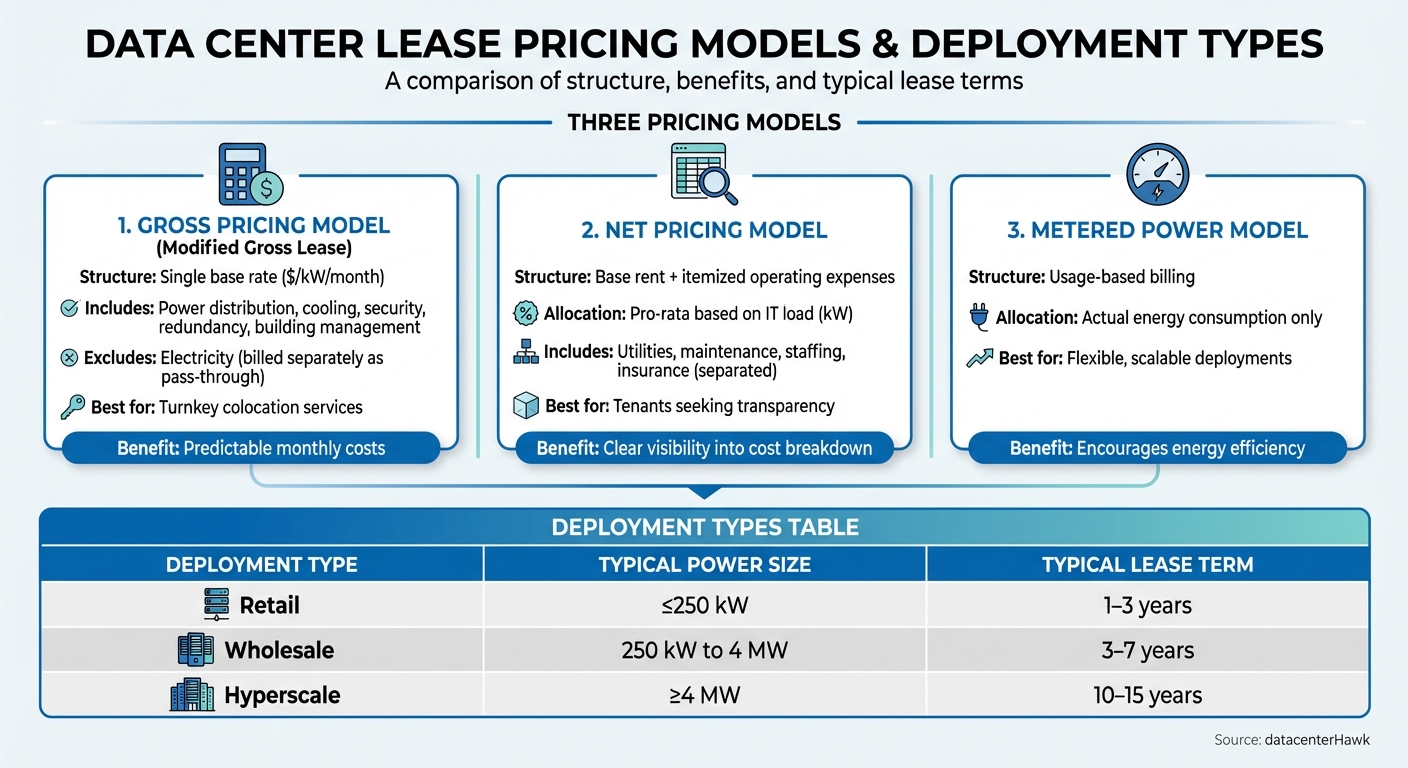
Data Center Lease Pricing Models and Deployment Types Comparison
When it comes to distributing costs in data center leases, choosing the right pricing model is a balancing act between predictability and flexibility. These models determine how expenses are shared and directly influence cost transparency and operational alignment. Below, we break down the three main pricing structures commonly used in the industry.
Gross Pricing Model
The modified gross lease is widely used for turnkey colocation services. In this setup, tenants pay a single base rate, typically quoted as $/kW/month, which covers essential infrastructure costs. These include power distribution, cooling, security, redundancy, and building management systems [2]. By bundling these expenses, this model simplifies budgeting and provides tenants with a consistent monthly cost.
However, electricity charges are usually excluded from the base rate. Instead, they are billed separately as pass-through charges (often referred to as "+ E") because they depend on actual consumption and utility rates [2]. This arrangement shields operators from fluctuations in energy prices while ensuring tenants only pay for the power they use.
Net Pricing Model
The net pricing model separates base rent from operating expenses. Operating costs - such as utilities, maintenance, staffing, and insurance - are allocated on a pro-rata basis, calculated according to each tenant's IT load (measured in kW) [5].
This structure provides a detailed breakdown of costs, giving tenants clear visibility into their expenses. It’s particularly appealing for those who value transparency and want to track how their share of costs evolves over time.
Metered Power Model
The metered power model takes a usage-based approach, billing tenants solely based on their actual energy consumption [3]. This model offers flexibility and scalability, allowing businesses to align costs with their operational demands. It also encourages energy-efficient practices, as tenants are directly accountable for their consumption.
That said, this structure can introduce more complexity, especially for large-scale deployments. DataBank highlights the benefits of this model:
With metered-power pricing, clients are charged according to their actual energy consumption. This pricing model allows for greater flexibility and scalability [3].
Deployment Types and Typical Lease Terms
The choice of pricing model often depends on the scale of deployment and lease duration. Here’s a quick comparison:
| Deployment Type | Typical Power Size | Typical Lease Term |
|---|---|---|
| Retail | ≤250 kW | 1–3 years |
| Wholesale | 250 kW to 4 MW | 3–7 years |
| Hyperscale | ≥4 MW | 10–15 years |
Source: datacenterHawk [2]
How to Allocate Costs in Data Center Leases
Once you've settled on a pricing model, the next step is creating a clear cost allocation system. This ensures each tenant pays their fair share while maintaining thorough documentation to reduce potential disputes.
Pro Rata Allocation for Operating Expenses
To calculate a tenant's share of operating expenses, divide their rentable square footage (RSF) by the total RSF of the facility. For example, if a tenant occupies 5,000 RSF in a 50,000 RSF data center, their share would be 10%.
When the facility isn't fully occupied, you can apply a gross-up adjustment, treating the building as if it were 90–100% occupied. This adjustment ensures fair recovery of shared costs, even with partial occupancy.
It's also wise to negotiate caps on controllable expenses like management fees, janitorial services, and routine maintenance. These caps, typically between 3% and 5% annually, help prevent unexpected cost increases. However, uncontrollable expenses - such as utilities, property taxes, and insurance - are generally excluded from these caps. If the lease uses a base year structure, tenants only cover increases beyond the operating expenses incurred during the first lease year, offering more predictable cost adjustments.
Power and Cooling Cost Allocation
Power and cooling often represent the largest variable costs in a data center, making accurate allocation essential. Sub-metering is the most precise method, as it tracks each tenant's actual utility usage. This approach ensures tenants are billed based on their consumption.
If sub-metering isn't an option, costs can be allocated on a pro rata basis using square footage. However, this method is less precise, as power consumption can vary significantly depending on equipment density and usage patterns.
For facilities using a committed kW model, it’s crucial to establish clear rates for overages. These rates typically range from $80 to $200 per kW per month and are often higher than the contracted rates. To avoid these extra charges, experts suggest maintaining a 20% capacity buffer.
Incorporating Cost Allocation into Lease Agreements
Once you've established allocation strategies, ensure they are clearly defined in the lease agreement. Explicitly outline operating expenses, specifying what is included and excluded. For example, landlord corporate overhead, leasing commissions, and capital improvements (unless amortized) are commonly excluded, as are costs reimbursed by insurance.
To avoid disputes, use BOMA standards to measure square footage consistently. Clearly state how utilities will be managed - whether through direct metering, sub-metering, or pro rata allocation. Direct metering or sub-metering is usually preferred in environments with high utility usage.
If tenants are responsible for capital improvements, such as energy efficiency upgrades, the lease should specify that these costs will be amortized over their useful life at a reasonable interest rate. Additionally, distinguish between controllable and uncontrollable expenses. Annual caps should apply only to controllable costs, while uncontrollable costs like utilities remain uncapped.
Using Technology to Track and Verify Costs
Building on traditional cost allocation methods, technology takes accuracy and transparency to the next level. Relying on manual processes for cost allocation in data center leases often leads to errors, disputes, and inefficiencies. Automated platforms address these challenges by centralizing expense data, applying rule-based allocation, and creating clear audit trails. In fact, organizations typically allocate over 95% of their infrastructure usage to specific owners - a level of precision that's nearly impossible to achieve without software support [7].
Benefits of Cost Allocation Software
Automated platforms significantly reduce errors from manual data entry by using smart tagging systems to categorize expenses automatically. Even when tagging is overlooked, the software applies virtual tags to ensure 100% of costs are allocated [6]. This eliminates those vague "miscellaneous" expense categories that often lead to disputes between tenants.
Role-based access control (RBAC) ensures stakeholders only see data relevant to them [7]. For example, data center landlords managing multiple tenants can allow each tenant to verify their allocated costs without exposing sensitive information about others. Real-time dashboards further enhance oversight by providing instant insights into key metrics like Net Operating Income (NOI), Capital Expenditures (CapEx), and operating expenses. This allows property managers to quickly identify and address anomalies before they escalate into major problems.
CoreCast Features for Cost Allocation
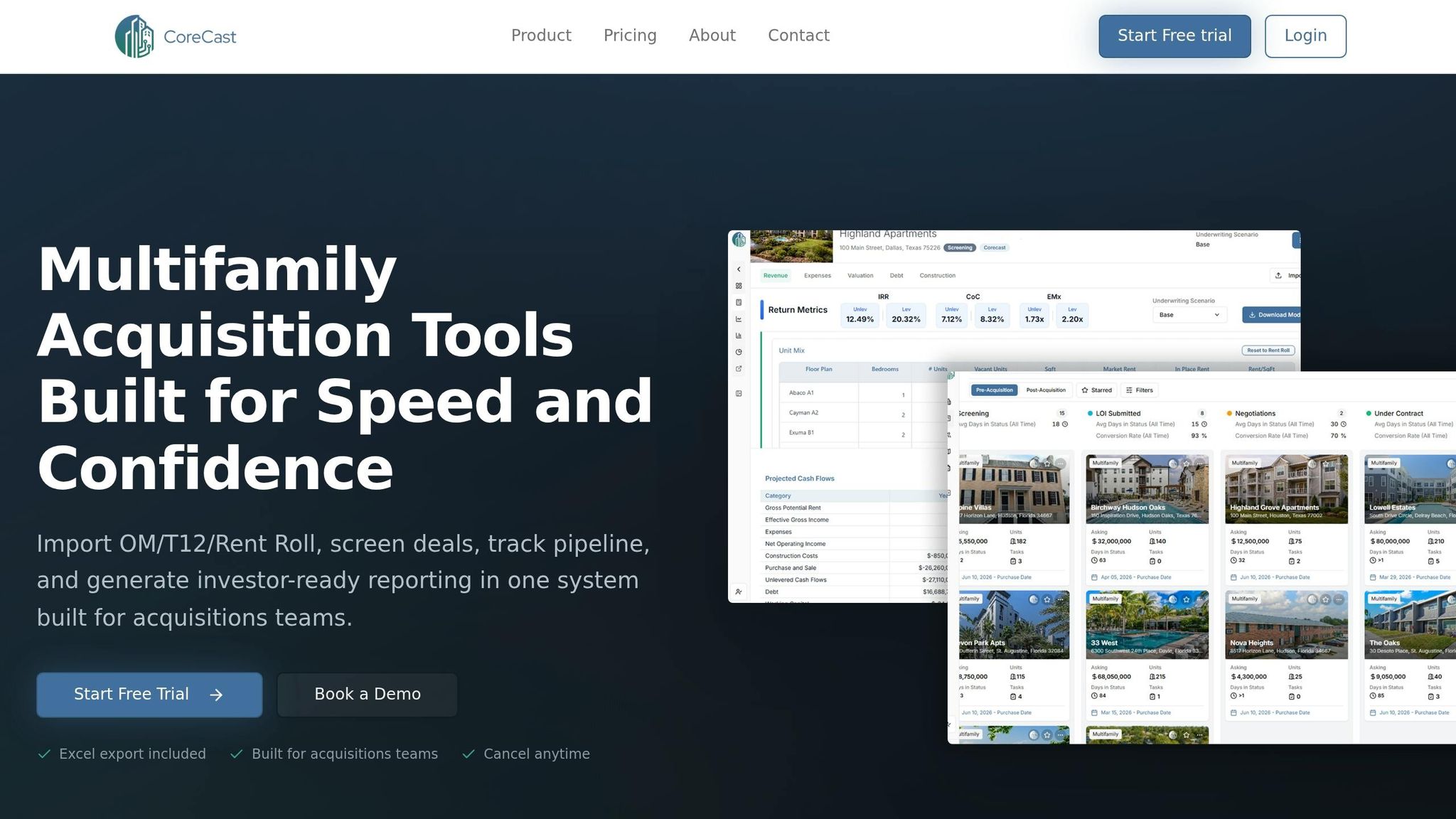
CoreCast integrates seamlessly with property management systems, serving as a centralized hub for expense data and eliminating the data silos that often complicate cost verification. Its smart tagging feature automatically assigns expenses to the right categories and flags missing or outdated information, ensuring reports are always complete. Version tracking adds an extra layer of accountability by creating a clear audit trail - critical for regulatory compliance and maintaining strong tenant relationships.
For data center properties, CoreCast offers real-time alerts to notify managers when critical thresholds, like operating expenses exceeding negotiated caps, are breached. The platform is designed with American financial standards in mind, displaying costs in formats like dollars per square foot per year ($/SF/year) with comma separators for larger amounts. Its centralized portal provides tailored performance data to investors, lenders, and internal teams, eliminating the need for manual reporting and ensuring consistent communication about cost allocation.
Conclusion
Managing cost allocation in data center leases demands clear documentation, precise measurement, and dependable technology. Without these, budgets can become inaccurate, margins may misrepresent actual expenses, and decision-making suffers. When teams struggle to explain cost increases, it can create mistrust among finance, engineering, and operations teams.
To address this, audit readiness is key. Regulators, auditors, and boards require transparent justifications for financial reports. This means defining a clear structure for cost objects, relying on measurable factors like usage volume or power consumption, and treating allocation logic with the same care as source code - complete with version control and regular updates [6].
Technology platforms, such as CoreCast, help eliminate vague, "close enough" methods that often lead to disputes. These tools automate tagging, ensure complete cost coverage using virtual tags, and offer real-time expense tracking. By accurately pricing services based on the true "cost to serve" rather than assumptions, businesses can directly influence profitability [6].
In addition to technology, routine reconciliation - whether monthly or quarterly - ensures that allocated costs match actual billing. For data center properties, where expenses for power, cooling, and space often fluctuate, this practice strengthens trust and supports long-term lease relationships.
FAQs
Which pricing model fits my data center lease?
Choosing the right pricing model for your data center lease boils down to understanding your specific needs and financial goals. Here are the most common options:
- Fixed Pricing: Ideal if you prioritize predictability. This model locks in costs, making it easier to plan budgets without worrying about unexpected fluctuations.
- Usage-Based Models: Perfect for those who want their expenses to mirror actual consumption. It’s a flexible option, especially if your usage varies over time.
- Hybrid Approaches: A middle ground that combines the stability of fixed pricing with the adaptability of usage-based models. This option can offer both reliability and room for growth.
Take a close look at your budget, how much risk you're comfortable with, and your operational needs. The key is to choose a model that aligns with your financial strategy while delivering the most value for your investment.
How can tenants verify power and cooling charges?
Tenants can double-check power and cooling charges by reviewing utility bills and comparing them against submeter readings. Submeters track actual energy consumption, making it easier to verify charges. To stay on top of things, ask for detailed invoices that clearly outline usage and the rates applied. Keeping a close eye on these bills and readings regularly helps ensure everything adds up and promotes clarity in billing.
What lease terms reduce cost disputes the most?
Lease agreements that aim to minimize cost disputes usually rely on clearly outlining who handles which expenses. Gross leases simplify things by bundling most costs into the rent, reducing the chances of disagreements. On the other hand, net leases, particularly triple-net (NNN) leases, assign most expenses - like taxes, insurance, and maintenance - to tenants, which helps limit conflicts over shared costs. Clearly defining responsibilities for items like CAM (Common Area Maintenance) charges and maintenance tasks is key to keeping disputes at bay.