
Green Certifications vs. Non-Certified Spaces: ROI Comparison
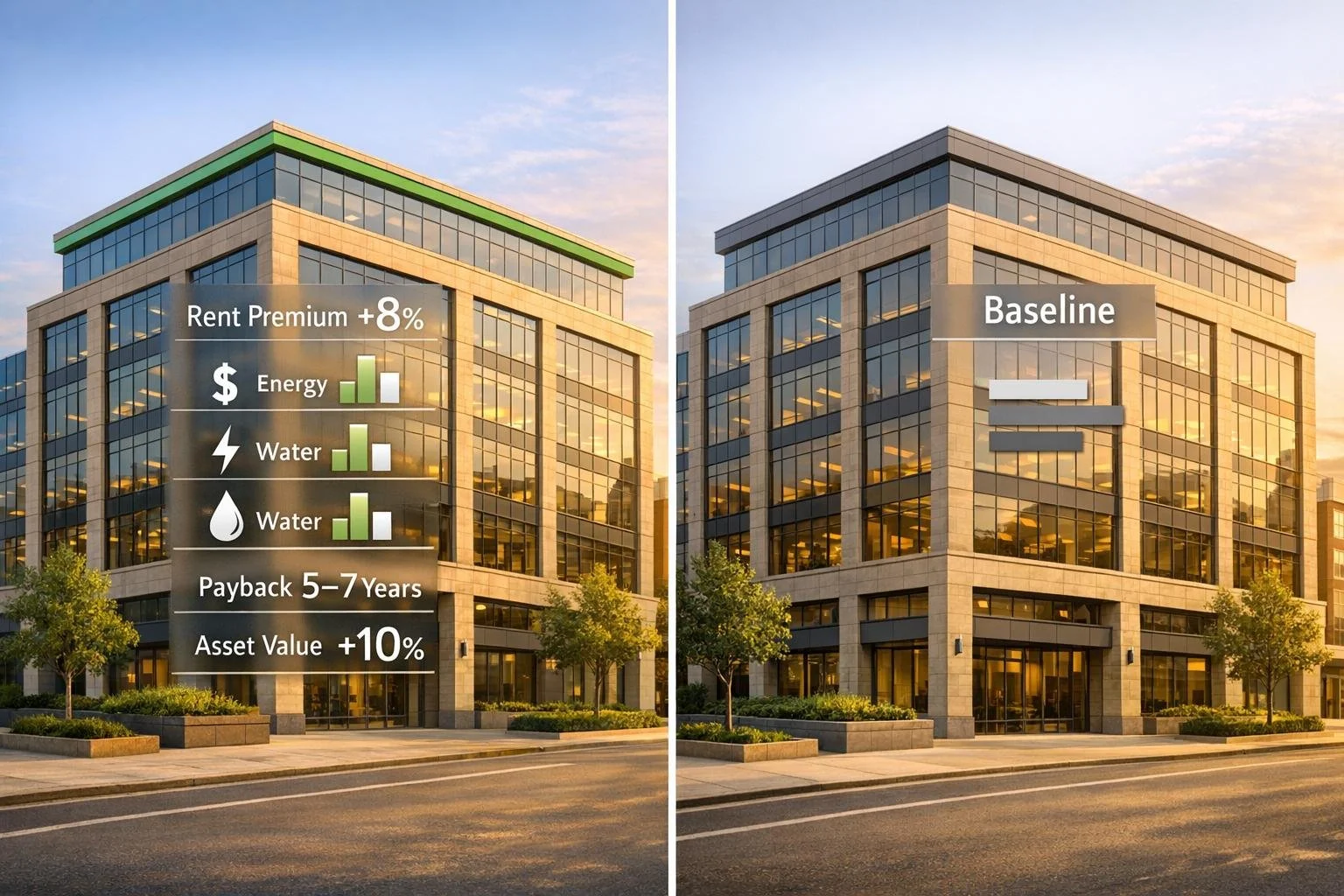
Green-certified buildings outperform non-certified ones in ROI. Here's why:
- Higher Rent & Occupancy: LEED-certified spaces command 3.7%-4% rent premiums and 4%-9.5% higher occupancy rates.
- Energy & Cost Savings: Certified properties save 25%-50% on energy and 11%-40% on water, cutting utility bills significantly.
- Increased Asset Value: Green-certified buildings see an 8%-10% boost in property value and avoid the "brown discount." This shift highlights the importance of benchmarking real estate portfolios to identify value-add opportunities.
- Upfront Costs: Green certification adds 2%-8% to construction budgets but pays off within 3-7 years through savings and revenue gains.
- Market Demand: Tenants prioritize certified spaces for ESG goals, making them a smarter long-term investment.
Quick Comparison
| Metric | Green-Certified | Non-Certified |
|---|---|---|
| Rent Premium | 3.7%-4% higher | Standard |
| Occupancy Rate | 4%-9.5% higher | Standard |
| Energy Savings | 25%-50% less consumption | Standard |
| Water Savings | 11%-40% less usage | Standard |
| Asset Value Increase | 8%-10% higher | No change |
Green-certified buildings deliver better financial returns, attract premium tenants, and align with evolving market trends. Investing in certification is a smart move for property owners looking to maximize long-term portfolio performance.
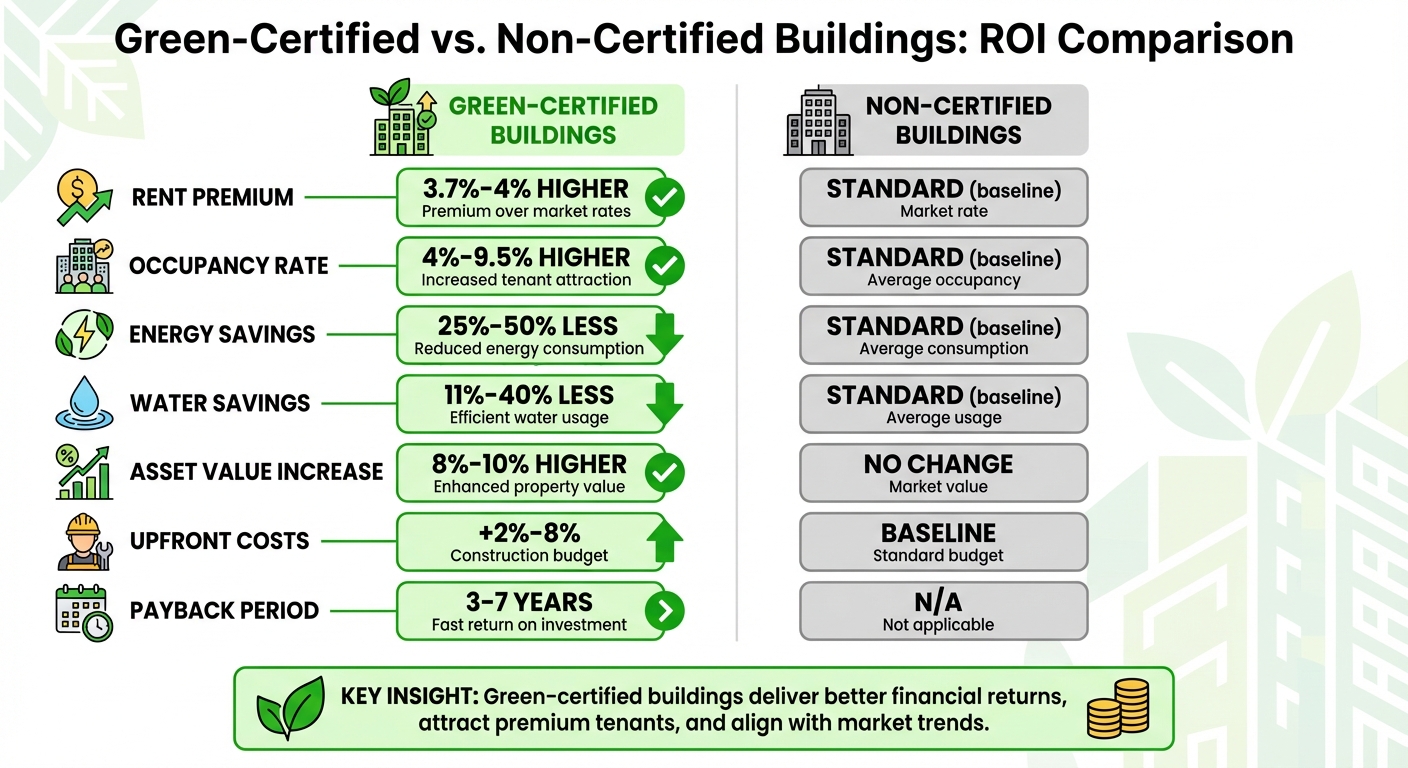
Green-Certified vs Non-Certified Buildings: ROI Comparison Infographic
Future Proof Property: Certification, Performance & Green Finance
sbb-itb-99d029f
What Are Green Certifications?
Green certifications are independent systems designed to evaluate and verify a building's performance in areas like energy efficiency, environmental impact, and even the well-being of its occupants. In the U.S., the most recognized programs are LEED, ENERGY STAR, and WELL, each with its own focus and evaluation criteria.
These certifications deliver tangible benefits, such as lower utility costs, better tenant retention, and higher property values. For example, LEED-certified buildings cut energy use by 25% to 40% and water use by 30% to 50% [12]. Meanwhile, ENERGY STAR-rated office buildings see 2.7% higher rents and 9.5% higher occupancy rates compared to non-certified buildings [10][11]. The certification process involves detailed documentation, performance testing, and ongoing compliance, rewarding property owners with operational savings and a stronger market presence.
Major Green Certification Programs
LEED (Leadership in Energy and Environmental Design) stands out as the most widely recognized green certification worldwide, with over 100,000 certified projects [12]. Managed by the U.S. Green Building Council (USGBC), LEED uses a point system across nine categories - such as energy use, water efficiency, and indoor air quality - to assess a building's performance. Based on total points, properties can achieve one of four levels: Certified, Silver, Gold, or Platinum [12]. This program emphasizes reducing a building's overall environmental impact and carbon footprint.
ENERGY STAR, a federal initiative, focuses exclusively on energy efficiency. It benchmarks a building's energy consumption against national averages and certifies those that demonstrate superior performance [2]. For context, LEED-certified buildings consume 14% less energy per square foot compared to their non-certified counterparts [7].
WELL Building Standard, administered by the International WELL Building Institute (IWBI), shifts the focus to occupant health and well-being. It evaluates ten areas, including air and water quality, lighting, thermal comfort, and mental health [12]. Unlike LEED, WELL certification requires on-site testing to verify conditions like air purity and acoustics. With around 4,500 certified projects globally, WELL remains less common, offering a competitive edge for early adopters [12].
These programs highlight how certifications not only improve operational efficiency but also enhance tenant satisfaction - key drivers of long-term returns.
Primary Benefits of Green Certifications
Green certifications bring advantages in three main areas: cost savings, environmental impact, and market appeal. On the operational side, certified buildings benefit from lower utility bills, thanks to features like energy-efficient HVAC systems, better insulation, and LED lighting [12][6].
Environmentally, these programs help reduce carbon emissions, conserve water, and encourage the use of sustainable materials. They also align with ESG (Environmental, Social, and Governance) goals, a priority for many property owners. In fact, 89% of real estate investors plan to strengthen their health and wellness strategies [2].
Perhaps the most compelling advantage is tenant appeal. Green-certified spaces attract premium tenants by offering lower operating costs, improved employee productivity, and alignment with corporate sustainability goals [3][12][6]. For instance, WELL-certified buildings report a 15% to 25% boost in workplace satisfaction and a 6% to 10% improvement in cognitive performance [12]. Post-pandemic, the demand for healthier buildings has skyrocketed, with 92% of investors predicting this trend will continue [2].
"The findings validate two key points. Firstly, making buildings more sustainable is a wise investment (it pays). Secondly, tenants care about certification (the badge matters)." [11]
- James Gray-Donald, Vice President of Sustainability, Bentall Kennedy
These benefits not only make properties more sustainable but also drive higher rents and asset values, setting the stage for a deeper look at the financial trade-offs between certified and non-certified spaces.
Upfront Costs: Green-Certified vs. Non-Certified Spaces
Getting green certification comes with a higher price tag upfront. On average, developing green-certified buildings costs 6.5% more than non-certified ones. This increase is largely due to design fees, which are about 32% higher, and fittings and finishes like LED lighting and sustainable flooring, which cost 28% to 32% more [13]. For example, if you’re renovating a 100,000-square-foot office with a $15 million baseline budget, adding LEED Gold certification could add $450,000 to $900,000, while WELL Gold certification might increase costs by $750,000 to $1,800,000 [12].
Another factor to consider is the construction timeline. Green-certified projects take about 11% longer to complete, delaying potential income from rentals or sales [13]. As Nils Kok, Associate Professor at the University of Maastricht, puts it:
"Design costs have an outsized impact on the construction practices ultimately... it's what I pay upfront before I get a construction loan" [13].
These upfront costs can strain developers’ cash flow before financing is secured, highlighting the need for a central source of truth for real estate investment to manage complex budgets. The certification level you aim for also plays a big role in shaping these expenses.
Cost Premiums for Certification
The certification tier directly affects how much extra you’ll spend. LEED certification for new construction typically adds 2% to 8% to total project costs [12][14]. Higher-level certifications, like BREEAM "Very Good" or "Excellent", can increase costs by 5% to 19%, while lower-level BREEAM certifications ("Pass" or "Good") often come with no added environmental cost premium [13]. WELL certification, on the other hand, requires a 5% to 12% boost in baseline budgets due to its more rigorous standards, such as onsite air and water quality testing, circadian lighting, and advanced filtration systems [12].
| Cost Category | Non-Certified Space | Green-Certified Space |
|---|---|---|
| Average Construction Cost | Base | +6.5% average premium [13] |
| High-Tier Certification | Base | +5% to +19% premium [13] |
| Design Fees | Standard | +32% higher [13] |
| Fittings & Finishes | Standard | +28% to +32% higher [13] |
| Construction Timeline | Standard | +11% longer duration [13] |
Although these upfront costs are higher, the long-term savings and potential for increased revenue often make the investment worthwhile. However, additional factors can influence these initial expenses.
Factors That Affect Upfront Expenses
Several variables impact the final costs of certification. Project location is a key factor - areas with strong unionized labor markets or limited access to specialized materials often see higher costs [13]. Building size also matters; smaller projects tend to face higher percentage premiums since consultant fees and registration costs don’t scale down effectively [12]. The certification tier you pursue plays a role too. For instance, achieving LEED Platinum might require advanced energy modeling and specialized features like triple-paned glass or heat recovery systems, which can be challenging for smaller architecture firms to handle [13].
Timing is another critical factor. Incorporating sustainability goals during the pre-design phase can significantly reduce costs compared to retrofitting green features into a project already underway [7][2].
Federal and state incentives can help offset some of these expenses. For instance, the Section 179D Energy Efficient Commercial Buildings Deduction offers up to $5.00 per square foot for qualifying energy-efficient improvements [12]. States like California and New York also provide utility rebates and tax abatements that can cover 10% to 20% of certification premiums [12].
Operational Savings: Long-Term Efficiency Gains
Investing in green certifications may come with higher upfront costs, but the operational savings they deliver can quickly make up for it. For instance, LEED-certified buildings typically use 25% to 50% less energy than their non-certified counterparts, which translates to noticeable reductions in utility bills [17][19]. Features like passive design, efficient HVAC systems, and LED lighting contribute to energy savings of 20%–40%. Smart technologies, including building management systems and occupancy sensors, ensure energy is consumed only when necessary.
The cost savings extend beyond energy usage. Green-certified buildings also cut water consumption by 11% to 40%, thanks to innovations like low-flow fixtures, rainwater harvesting, and efficient irrigation systems [17][19]. For multi-family properties, this means utility savings of about $0.45 per square foot (a 7.8% reduction), while commercial spaces save an average of $0.80 per square foot (9.4% savings) [1]. Additionally, green retrofits can lower overall operational costs by around 10% within the first year [17].
"Properties with green building certifications tend to have higher property values and are more energy efficient than buildings without a certification" [18].
- Jessica Lautz, Deputy Chief Economist at the National Association of REALTORS®
Let’s take a closer look at how energy efficiency and utility cost reductions contribute to these savings.
Energy Efficiency and Utility Cost Reductions
Energy savings in certified buildings come from a combination of advanced systems and design choices. A striking example is the Paharpur Business Center (PBC) in Delhi, India. After undergoing green renovations to achieve LEED Platinum certification, this 30-year-old building reduced its energy usage by 60% and slashed electricity bills by 30%. Specific upgrades included replacing fluorescent lighting with natural light wells (saving 17.76 kW per day), installing 25 motion sensors (cutting energy use by 60–62% in those areas), and adjusting HVAC temperatures to 77°F, which reduced the HVAC load by 15% [19].
On-site renewable energy systems further boost savings. Solar PV panels and geothermal heat pumps enable buildings to generate their own power, while solar water heating systems can cut water heating costs by as much as 80%. Energy Star-certified buildings, for example, consume 8% less energy than standard buildings [16]. LEED-certified properties in the U.S. take it a step further, using 14% less energy per square foot compared to non-certified spaces [7].
| Efficiency Category | Savings in Certified vs. Non-Certified |
|---|---|
| Energy Consumption | 25%–50% [17][19] |
| Water Usage | 11%–40% [19] |
| Maintenance Costs | 12%–20% [17][19] |
| Operating Costs (Lifespan) | Up to 20% [19] |
| Carbon Emissions | 30%–50% [19] |
These measurable savings not only improve long-term ROI through scenario analysis but also strengthen the market appeal of green-certified properties. Investors can use a property portfolio growth planner to track these value gains over time.
Maintenance and Lifecycle Cost Benefits
The benefits of green certifications go beyond energy and water savings. They also lead to lower maintenance and lifecycle costs. For example, LEED-certified buildings typically experience maintenance costs that are nearly 20% lower than those of standard commercial buildings [17]. This is largely due to the use of high-quality, sustainable materials that last longer and require less frequent replacement, as well as efficient systems designed for durability. Regular commissioning and audits, often required to maintain certification, help identify and address mechanical issues early, avoiding expensive repairs.
One practical example highlights these benefits: by integrating an Indoor Air Quality (IAQ) system with the HVAC setup, a building achieved a 10% reduction in energy costs while improving system performance and reducing wear [19]. Additionally, a condensate recovery process saved 1,500 liters of water and 4 kW of energy daily, cutting utility costs and easing the burden on water heating systems [19]. Over time, these efficiencies add up, with LEED-certified buildings reducing total operating costs by as much as 20% [19]. These operational savings contribute to a potential ROI of up to 40% over the building's lifetime [19].
Revenue Premiums: Rent, Occupancy, and Resale Value
Green certifications are proving to be a financial game-changer, driving higher rents, better occupancy rates, and stronger resale values. This boost comes from the growing demand for sustainable spaces and the perception of certifications as a mark of quality. By 2026, sustainability has shifted from being a competitive edge to an expected standard, making these revenue premiums even more pronounced. This trend is particularly evident in rent premiums and tenant retention rates.
Rental and Occupancy Premiums
LEED-certified office buildings in the U.S. consistently achieve a rent premium of 3.7% to 4% over non-certified properties, even when adjusted for factors like building age, size, and location [3][5]. These numbers highlight the clear financial advantages of certification.
Certified buildings also have a leg up when it comes to occupancy. LEED-certified properties see a 4% boost in occupancy compared to non-certified spaces, while Energy Star-certified buildings enjoy an even higher 9.5% occupancy premium [7][10]. In Canada, the story is similar: LEED-certified properties command 10.2% higher rents and 8.5% greater occupancy than their non-certified counterparts. Properties with dual certifications, such as LEED and BOMA BEST Level 3, see an impressive 18.7% higher occupancy rate [7][11].
Interestingly, rent premiums vary by building class. LEED-certified Class B buildings enjoy a 4% rent premium, which is double the 2% premium seen in Class A buildings. This reflects the scarcity of mid-tier certified options [3]. Additionally, certified buildings benefit from a 5.6% higher tenant renewal probability, which reduces vacancy costs and ensures steadier cash flow [10][11].
These rental and occupancy advantages significantly enhance the overall value of certified properties.
Impact on Asset Valuation
The revenue benefits of green certifications extend directly to asset valuations. Properties with LEED or BOMA BEST certifications often see an 8% to 10% increase in value compared to similar non-certified buildings [10][11]. Sales price premiums for green-certified buildings can range from 10% to 20% [20][21].
"The findings and their application are powerful as they point directly to overall improved valuations for certified office assets relative to their non-certified competitors."
- James Gray-Donald, Vice President of Sustainability, Bentall Kennedy [11]
Several factors drive these valuation premiums. Lower operating costs lead to higher net operating income (NOI), while reduced regulatory risks and stronger tenant demand further enhance value. For example, a $50,000 increase in annual NOI from green efficiencies can raise a property's value by about $833,000, assuming a 6% capitalization rate [4]. Additionally, green-certified buildings are less likely to default on mortgages, making them more appealing to lenders and investors [3].
| Metric | Green-Certified (LEED/Energy Star) | Non-Certified Spaces |
|---|---|---|
| Rent Premium | 3.7%–4% higher [3][5] | Standard |
| Occupancy Rate | 4%–9.5% higher [7][10] | Standard |
| Tenant Renewal Rate | 5.6% higher probability [10][11] | Standard |
| Asset Valuation | 8%–10% increase [10][11] | Standard |
| Energy Consumption | 14% lower per sq. ft. [7] | Standard |
Meanwhile, non-certified buildings are increasingly facing a "brown discount", struggling to compete with their more efficient and desirable certified counterparts. As corporate ESG mandates become the norm and regulatory pressures intensify, the gap in value between certified and non-certified properties is expected to grow even wider.
Long-Term ROI: Payback Periods and Net Returns
Most green-certified commercial spaces recoup their initial investment within three to seven years, a timeframe that aligns well with the industry standard of three to five years for acceptable commercial investments [23][24]. Once this payback period is over, these properties continue to deliver increased returns through higher rent premiums, reduced operating expenses, and improved asset values.
With upfront costs typically ranging from just 0% to 5% of total construction budgets, combined with quick operational savings, these projects often show strong financial performance [7]. On average, commercial properties save $0.80 per square foot (or 9.4%) on utilities. Additionally, LEED-certified properties enjoy a 3.7% rent premium and a 4% boost in occupancy rates, which accelerates overall returns [1][10]. These savings not only shorten the payback period but also improve financing terms, making green-certified buildings a smart long-term investment.
"A small 2% investment in green building design saves more than ten times the original investment over time."
- California Sustainable Building Task Force [1]
Certain technologies can deliver even faster payback. For example, LED lighting retrofits typically recover costs within 1–4 years, and waterless urinals achieve ROI in 1–3 years [22]. HVAC system upgrades usually pay off within 5–7 years, while solar installations, though slower at 8–15 years, provide energy independence and protect against rising utility costs [15][22]. Timing these upgrades strategically - such as during tenant turnover, refinancing, or major renovations - can help minimize disruptions while maximizing returns [15]. These short-term wins also contribute to long-term asset appreciation.
The financial benefits don’t stop there. A $1 reduction in annual energy costs can increase a building’s market value by $18.32 at a 5.5% capitalization rate [1]. This is one reason why green-certified buildings tend to see an 8% to 10% increase in overall asset value compared to non-certified properties [10][11].
To further boost net returns, property owners can leverage financing programs like Fannie Mae's Green Rewards or Freddie Mac's Green Up, which offer higher loan amounts or discounted rates based on projected savings [1][2]. FHA-insured loans for green-certified buildings also reduce annual mortgage insurance premiums to 25 basis points, compared to the standard 45–70 basis points [1][2]. Tax incentives, such as the 179D Energy-Efficient Commercial Building Tax Deduction and the 45L Tax Credit (up to $5,000 per unit for multifamily properties), help offset upfront costs [1]. Together, these financing options, tax benefits, and operational savings create a compounding effect, significantly reducing payback periods while amplifying long-term returns.
Market Trends Driving Green Certification ROI in 2026
The financial benefits of green-certified spaces are becoming even clearer as market trends continue to evolve. By 2026, sustainability has moved from being a competitive edge to an industry standard. Over 60% of renters now consider sustainability features when choosing properties, and institutional investors are increasingly focusing on ESG-compliant portfolios [25]. Green-certified properties are also better positioned to avoid becoming "stranded assets" as energy regulations grow stricter [9]. These shifts in the market directly influence the long-term return on investment (ROI) for green-certified buildings.
Green-certified properties see tangible financial gains, including rental premiums of 4% to 7% and resale value increases as high as 16% [9]. Additionally, buildings with strong indoor air quality scores experience 18% faster lease renewals [28]. These advantages are largely driven by changing tenant expectations.
Tenant Preferences for Sustainability
Corporate tenants, particularly those with public net-zero commitments, are increasingly avoiding non-certified properties [26]. This trend has led to the emergence of a "brown discount", where less sustainable properties are less desirable. The financial appeal is clear: energy-efficient multifamily properties can cut annual energy costs by up to 36%, and tenants are willing to pay more for these savings [25].
By late 2024, 62% of new commercial leases included green provisions - an increase from just 25% in 2021 [26]. These "green leases" address the traditional split-incentive issue, aligning the interests of landlords and tenants so both share the benefits of energy savings. The global green lease market is expected to grow to $58.35 billion by 2026, driven by corporate sustainability goals [27].
"Sustainability is no longer a differentiator. It is becoming the default expectation in multifamily real estate investing."
Tenant demand is just one factor. Regulatory changes are also playing a major role in shaping these market dynamics.
Regulatory Incentives and Market Pressures
Regulations are accelerating the case for green certification. For example, California's SB 253 and SB 261, effective in 2026, require companies to disclose detailed carbon emissions data, including Scope 3 emissions [26]. Additionally, over 30 major U.S. cities are expected to implement Building Performance Standards (BPS) laws by 2026. These laws set energy or emissions benchmarks for existing buildings, with non-compliance leading to significant fines and refinancing challenges [26].
Financial incentives are also driving adoption. Lenders such as Fannie Mae and Freddie Mac offer lower interest rates for green-certified properties. Meanwhile, the U.S. Inflation Reduction Act and Section 179D provide tax deductions for energy-efficient upgrades [8][29]. Solar installations benefit from a 30% Federal Investment Tax Credit (ITC), reducing upfront costs and speeding up ROI [9]. Additionally, 90% of asset managers believe that integrating ESG technologies - like real-time carbon tracking - boosts investor returns [26].
Globally, green building investments are projected to reach $24.7 trillion by 2030, with demand for low-carbon workspaces expected to exceed supply by 75% in major U.S. markets [26][30]. For property owners, green certifications aren't just about meeting regulations - they're about staying competitive in a rapidly changing market.
Using Technology to Track ROI Performance
Assessing the financial performance of green-certified versus non-certified properties requires advanced tools capable of isolating the "green premium" while accounting for factors like building age, location, and renovation history. Without such precise analysis, it’s tough to determine if a reported 3.7% rent premium stems from LEED certification or simply because the building is newer [11]. Platforms like CoreCast (https://corecastre.com) are designed for this level of detail, offering tools to calculate metrics such as IRR, equity multiple, and NOI. They also perform sensitivity analyses to model how shifts in the market - like a 1% interest rate hike or a 10% decline in rental income - impact certified versus non-certified properties [4]. This kind of analysis is critical for deciding whether to invest in green certification or divest from non-certified assets.
These tools also enable portfolio-wide insights that go beyond individual property analysis. For instance, CoreCast’s portfolio features help managers pinpoint underperforming non-certified assets and evaluate whether green certification investments could improve their valuation [4]. Competitive mapping further enhances decision-making by benchmarking NOI and cap rates across regions, revealing opportunities where green upgrades might deliver better returns.
For more tailored analysis, CoreCast offers its Fractional Analyst service, which provides customized underwriting and financial modeling. Pricing starts at $115 per hour for associate-level support or $15,000 per month for comprehensive fixed plans [4]. This service is especially useful for long-term projections, such as understanding how green premiums - like the 5.6% higher tenant renewal rates seen in certified North American office properties - affect returns over 25- to 30-year holding periods [11].
"Cash forecasting is vital for fund managers to effectively execute their strategy and deliver the best possible return for investors."
Incorporating operational savings and revenue premiums, real-time hold-sell analyses allow investors to align green retrofits with key moments like tenant move-outs or refinancing events. This approach helps maximize ROI while minimizing disruptions [15]. With 74% of real estate investors prioritizing data tracking to integrate ESG strategies, platforms that combine underwriting, pipeline tracking, and portfolio analysis are becoming essential for staying competitive in the market [2].
Conclusion
The financial benefits of green-certified commercial spaces stand out. These buildings consistently deliver higher rent premiums, better occupancy rates, and stronger asset valuations compared to non-certified properties [3][32].
This trend mirrors a larger industry transformation. Non-certified buildings are increasingly facing a "brown discount", making it harder to lease them and diminishing their market appeal [3]. On the flip side, 87% of occupiers aim for their portfolios to be entirely green-certified by 2030 [31], and 92% of investors anticipate growing demand for sustainable buildings through 2028 [2]. This shift isn’t just a passing phase - it’s a new baseline for market expectations.
Beyond financial rewards, operational efficiencies make a strong case. Certified buildings often achieve 25%–50% energy savings, up to 40% water use reductions, and about 20% lower maintenance costs [1][7]. They also enjoy 5.6% higher lease renewal rates, which translates to more stable and enhanced cash flow [7].
FAQs
Which green certification should I pursue - LEED, ENERGY STAR, or WELL?
Choosing between LEED, ENERGY STAR, and WELL comes down to your property's specific goals.
- LEED is all about sustainability, helping to increase property value while cutting down on operating expenses.
- ENERGY STAR zeroes in on energy efficiency, making it a great choice if utility savings are your main focus.
- WELL emphasizes improving occupant health and satisfaction, though it often comes with higher initial costs.
Your decision should align with whether you're aiming to reduce environmental impact, save on energy, or prioritize wellness.
How do I estimate payback for my specific building and market?
To estimate the payback period for green upgrades, start by examining the initial costs of improvements like energy-efficient systems. Then, calculate the financial benefits, which typically include savings on utility bills, reduced operational expenses, and potential rental income increases.
Use local data to make your analysis accurate. Look at utility rates in your area, tenant demand for eco-friendly properties, and how similar upgrades have impacted property performance. With this information, create a cash flow analysis. This will show how much you save and earn over time, helping you figure out how long it will take for those savings and additional income to cover your initial investment.
Is it better to certify during new construction or retrofit later?
Certifying a building during the construction phase lets you seamlessly incorporate energy-efficient designs and cutting-edge technologies right from the start. This approach provides greater control over emissions and aligns well with long-term sustainability targets. On the other hand, retrofitting can be a more budget-friendly and eco-conscious option. By reusing existing structures, it cuts down on embodied carbon while offering solid returns on investment through improvements like upgraded lighting systems, modern HVAC units, or solar installations.
Ultimately, the right choice depends on your project’s specific goals, current market conditions, and the building’s capacity for meaningful upgrades.